


Please Leave Us A Message

Haoyong Automotive Controls
Vibration in a Mirror Actuator is a common issue that directly affects positioning accuracy,system stability,and overall performance,especially in high-precision applications such as optical alignment,laser systems,and automated inspection equipment.For B2B buyers and engineers,understanding the root causes and troubleshooting methods is essential before selecting or replacing components.
One of the most frequent causes of vibration is improper mounting or mechanical misalignment.Even a high-quality DC motor Mirror Actuator or stepper motor mirror actuator can produce vibration if the installation surface is not flat or if there is structural looseness.Ensuring rigid mounting,proper torque fastening,and alignment between the actuator and mirror assembly is the first step to eliminate unnecessary oscillation.
Another critical factor is resonance.Every Mirror Actuator system has a natural frequency,and when the operating frequency approaches this value,vibration becomes amplified.This is particularly noticeable in compact mirror actuator designs where space constraints may limit damping structures.To troubleshoot this,adjusting the operating frequency range or adding damping materials can significantly reduce resonance effects.
Control system tuning also plays a major role.In many cases,vibration is not purely mechanical but caused by poor control parameters.For example,a stepper motor mirror actuator may experience micro-stepping instability if the driver settings are not optimized.Similarly,a DC motor mirror actuator can generate oscillation if PID parameters are improperly tuned.Fine-tuning acceleration,deceleration,and feedback control loops helps stabilize motion.
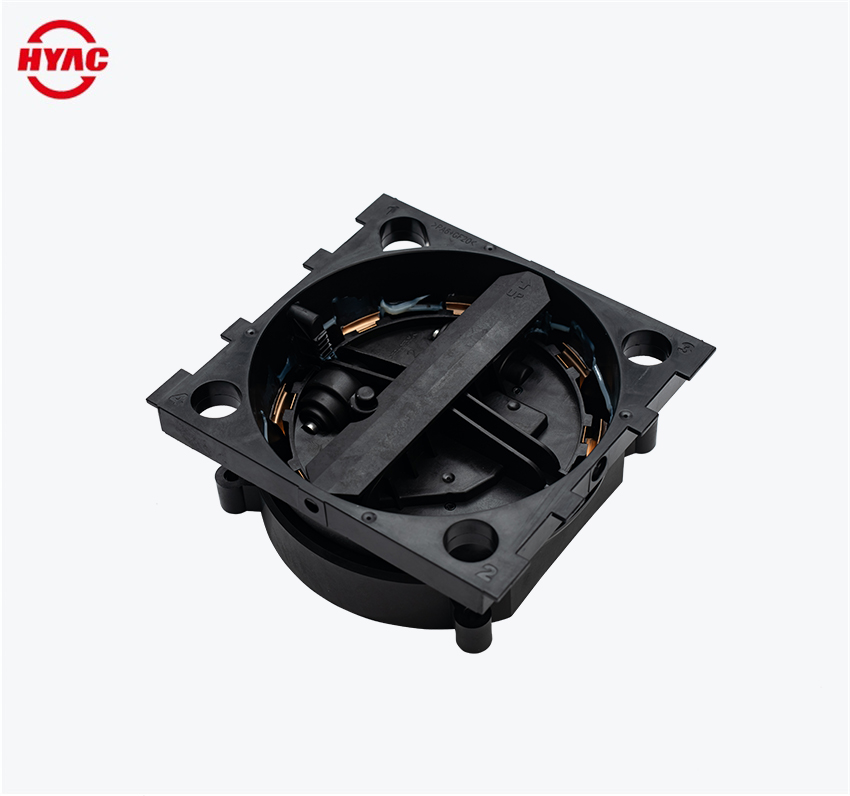
Load imbalance is another overlooked issue.If the mirror or attached components are unevenly distributed,the actuator will experience uneven force during movement,leading to vibration.This is especially important in mini mirror actuator systems where even small mass differences can have a large impact.Ensuring proper load distribution and balancing the mirror assembly can greatly improve performance.
Environmental factors should not be ignored.External vibrations from nearby machinery,temperature fluctuations,or airflow disturbances can interfere with actuator stability.In high-precision environments,isolating the system using anti-vibration platforms or enclosures is often necessary.
Wear and tear over time can also introduce vibration.Bearings,gears,and internal components degrade,especially in long-term industrial use.If a mirror actuator that previously operated smoothly begins to vibrate,it may indicate mechanical wear.Regular inspection and preventive maintenance are key to avoiding unexpected failures.
In practical applications,the most effective troubleshooting approach is systematic:start from mechanical structure,then evaluate control systems,and finally consider environmental influences.Whether using a compact mirror actuator for space-limited devices or a high-performance DC motor mirror actuator for precision systems,addressing vibration early can significantly extend product lifespan and improve operational accuracy.
For buyers,selecting a supplier that offers stable design,proper testing,and technical support is just as important as solving current vibration issues.A well-engineered mirror actuator should minimize vibration risks from the design stage,not just rely on post-installation adjustments.

Mr. Hansol Kim