


Please Leave Us A Message

Haoyong Automotive Controls
Most cars have one or two blend Door Actuators, depending on the design of the heating, ventilation, and air conditioning (HVAC) system. A vehicle with single-zone climate control typically uses one blend door actuator to regulate cabin temperature. A vehicle with dual-zone climate control generally uses two separate actuators, allowing the driver and front passenger to select different temperatures. Vehicles with rear climate control or more advanced multi-zone systems may use additional temperature-control actuators.
However, the number of blend door actuators should not be confused with the total number of HVAC door actuators. A complete automotive HVAC system may also use separate actuators for airflow direction and fresh-air or recirculation control. For automotive parts distributors, wholesalers, and importers, understanding these differences is essential when identifying replacement parts and matching products to vehicle applications.
A blend door actuator is an electrically controlled motor that positions the temperature blend door inside the HVAC housing. The door regulates how much air passes through or around the heater core before entering the passenger compartment. By adjusting this position, the HVAC system can deliver warm, cool, or mixed-temperature air.
The number of actuators is mainly determined by how many independently controlled temperature zones the vehicle has. Each independently adjustable temperature door generally requires its own actuator.
In a single-zone HVAC system, the driver and passengers share one temperature setting. One temperature blend door controls the air temperature supplied to the cabin, so one blend door actuator is normally sufficient.
When the driver changes the temperature setting, the HVAC control module sends an electrical command to the actuator. The motor rotates its output shaft, moving the blend door to the required position. Some designs use an internal position sensor to provide feedback to the control module, helping the system reach and maintain the requested setting.
This configuration is common in vehicles with basic manual air conditioning or single-zone automatic climate control. For replacement-part buyers, the key identification details include the vehicle model, production year, HVAC configuration, connector design, and actuator mounting position.
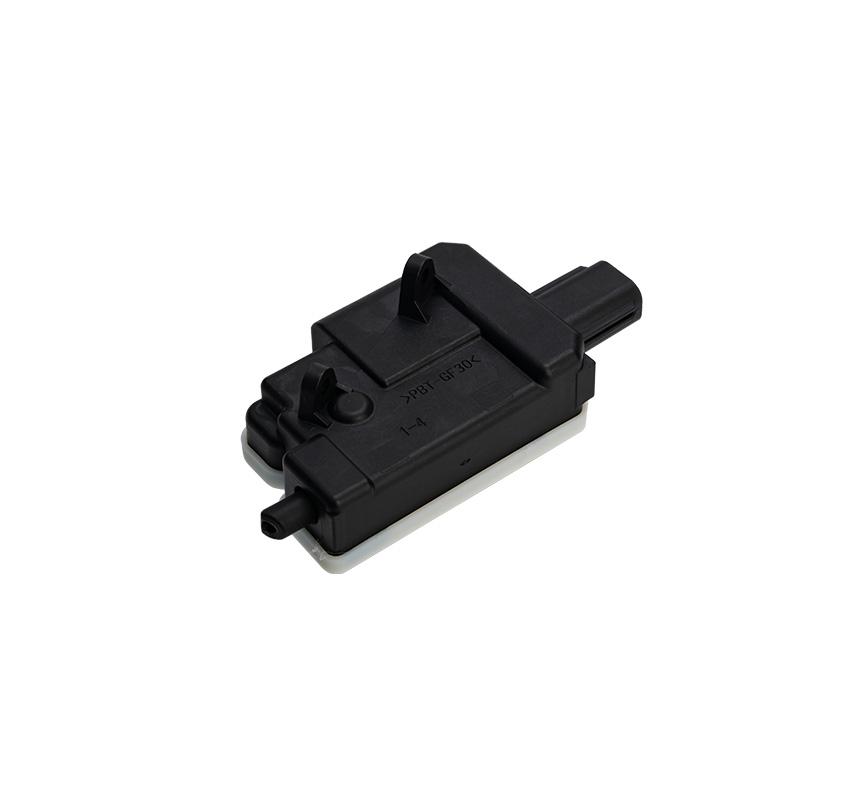
Dual-zone climate control allows the driver and front passenger to select different temperatures. To achieve this, the HVAC housing generally contains separate left-side and right-side temperature blend doors, each operated by an independent actuator.
For example, the driver may select 20°C while the passenger selects 24°C. The left blend door actuator adjusts the temperature for the driver-side airflow, while the right actuator controls the passenger-side airflow. The control module coordinates both motors according to the selected settings.
Vehicle service information for certain Dodge and Ram 1500 models describes this configuration clearly: the single-zone system uses one blend-air door and one actuator, while the dual-zone system uses two blend-air doors and two actuators. The second actuator is added to control the passenger-side temperature independently.
Some SUVs, minivans, and larger passenger vehicles provide independent temperature settings for the rear cabin. Depending on the HVAC architecture, the rear system may have its own temperature blend door and actuator. More advanced vehicles can also use separate temperature-control mechanisms for additional passenger zones.
For this reason, a vehicle with front and rear climate control may require more than two blend door actuators. The exact quantity depends on whether the rear HVAC unit has independent temperature adjustment and how the manufacturer divides the cabin into controlled zones.
For aftermarket suppliers, it is important not to assume that every vehicle in the same model range uses the same actuator quantity. Different trim levels, climate-control options, and production years can have different HVAC assemblies.
One common source of confusion in automotive parts purchasing is the use of the general term "door actuator." A vehicle may contain several air door actuators, but they do not necessarily perform the same function. A blend door actuator controls temperature, while other actuators manage airflow direction or air intake.
| Actuator Type | Main Function | Typical Application |
|---|---|---|
| Blend Door Actuator | Controls the mixture of heated and cooled air | Temperature adjustment |
| Mode Door Actuator | Changes the direction of airflow | Panel vents, floor vents, and windshield defrost |
| Recirculation Door Actuator | Controls whether the system draws outside air or recirculates cabin air | Fresh-air and recirculation settings |
| Rear Temperature Door Actuator | Adjusts the temperature supplied to the rear cabin | Independent rear climate control |
These actuators may look similar, and some vehicle designs use similar motor housings or electrical connections for different functions. However, their output shafts, rotation ranges, electrical characteristics, mounting positions, and calibration requirements may differ. A visually similar component is not necessarily interchangeable.
For example, Navistar's HVAC system training material identifies three main case actuators: a mode door actuator, an inlet door actuator, and an air temperature door actuator. This illustrates why the total number of HVAC Actuators can be higher than the number of blend door actuators alone.
A faulty blend door actuator can prevent the HVAC system from delivering the temperature selected by the driver or passenger. The symptoms may appear gradually or occur suddenly, depending on whether the problem involves the motor, internal gears, position feedback, wiring, or the blend door mechanism itself.
One of the most recognizable symptoms in a dual-zone vehicle is a temperature difference between the left and right sides. For example, the driver-side vents may produce cold air while the passenger-side vents continue to blow warm air, even when both sides are set to the same temperature.
This symptom can indicate a problem with one of the two temperature actuators. However, it does not automatically confirm actuator failure. A damaged blend door, restricted airflow, refrigerant-system problems, or HVAC control faults may produce similar symptoms. Technicians should compare the commanded temperature settings with the actual actuator movement before replacing components.
A worn actuator gear or a motor that cannot reach its commanded position may produce repeated clicking or tapping sounds. The noise is often noticeable when the ignition is switched on or when the driver changes the temperature setting.
Many automotive door actuators use small electric motors and reduction gears to move the HVAC doors. If internal plastic gears become worn or damaged, the motor may continue turning without moving the door correctly. Repeated operation under these conditions can make the noise more noticeable.
If changing the temperature from cold to hot produces little or no change in vent temperature, the blend door actuator may not be responding correctly. The cause could be an electrical supply issue, a damaged connector, a failed motor, or a control-module communication problem.
Before replacing the actuator, technicians should inspect the wiring, check for relevant HVAC fault codes, and verify whether the blend door can move freely. This helps avoid replacing a functioning actuator when the actual fault is located elsewhere in the system.
Accurate diagnosis is important because several HVAC components work together to regulate cabin temperature. Replacing an actuator based only on a general symptom can lead to unnecessary labor and repeat repairs.
The first step is to identify whether the vehicle has single-zone, dual-zone, or multi-zone climate control. Technicians should also confirm the vehicle identification number (VIN), model year, engine or trim configuration where relevant, and the position of the suspected actuator.
This information helps determine the correct actuator location and part number. A dual-zone system may have separate driver-side and passenger-side temperature actuators, so identifying the affected side is particularly important.
A technician can use a diagnostic scan tool to check HVAC-related fault codes and command the actuator through different positions when the vehicle supports active testing. The actuator's electrical connector, supply voltage, ground, control signals, and feedback circuit should also be inspected according to the manufacturer's service procedure.
Some actuators use a position-feedback sensor, while others use different control strategies. Therefore, diagnostic procedures and electrical specifications should be taken from the relevant vehicle service documentation rather than assumed to be identical across all applications.
After removing the actuator, the technician should inspect the blend door shaft and linkage for cracks, binding, or physical obstruction. Installing a new motor will not solve the problem if the door itself is damaged or cannot move through its designed range.
Some vehicles require an HVAC actuator calibration or initialization procedure after replacement. During calibration, the control module may learn the actuator's operating limits so that it can position the door accurately. Skipping a required procedure can result in incorrect temperature control or recurring fault codes.
For automotive parts distributors, wholesalers, importers, and repair-parts suppliers, actuator sourcing requires more than matching a product by appearance. Incorrect fitment can result in installation problems, product returns, warranty claims, and additional costs for downstream customers.
Buyers should request a clear application list covering vehicle make, model, year, climate-control configuration, and installation position. Where available, OE numbers and cross-reference numbers should be provided for verification.
Part-number coverage is particularly important for dual-zone and rear climate-control systems. Two actuators used in the same HVAC assembly may have different functions or mounting locations, even when their external housings appear similar.
The actuator motor must provide sufficient torque to move the blend door without excessive noise or unstable positioning. Gear engagement, output-shaft strength, operating range, and position feedback are important performance considerations.
For manufacturers, testing should evaluate whether the actuator can repeatedly reach its specified positions under the expected electrical and temperature conditions. Unstable movement, excessive backlash, or inaccurate feedback may affect cabin temperature regulation and product reliability.
Automotive Hvac Actuators operate inside dashboard assemblies where temperatures can change significantly during vehicle operation. Internal gears, housing materials, electrical terminals, and motor components must withstand repeated operation, vibration, and thermal exposure.
A reliable Door Actuator Manufacturer should have quality-control procedures covering dimensional inspection, electrical performance, operating noise, gear durability, and functional testing. Depending on the product design and customer requirements, validation may also include temperature cycling, vibration, and endurance testing.
For importers evaluating a Door Actuator Factory, it is useful to request product specifications, test records, material information, and traceability arrangements. A qualified Door Actuator Supplier should also be able to explain product compatibility, packaging standards, and available OE cross-references.
Automotive HVAC systems are not standardized across every vehicle platform. Differences in actuator dimensions, mounting points, electrical connectors, output-shaft geometry, and control methods create a wide range of replacement-part requirements.
A professional Door Actuators Manufacturer needs to manage these differences through application engineering, product development, and production quality control. This may involve comparing OE samples, reviewing technical drawings, measuring mounting interfaces, and verifying electrical specifications before developing a replacement actuator.
During production, important inspection points include:
Dimensional accuracy: Verify housing dimensions, mounting-hole positions, connector locations, and output-shaft geometry.
Electrical performance: Check motor operation, current characteristics, wiring connections, and feedback signals where applicable.
Operating performance: Confirm smooth rotation, correct travel range, stable positioning, and appropriate operating noise.
Mechanical durability: Evaluate gear engagement, shaft strength, housing integrity, and resistance to repeated operation.
Application verification: Confirm that the actuator matches the intended HVAC assembly and vehicle configuration.
For wholesalers and international distributors, working with an experienced Door Actuators Supplier can also improve product-range planning. Clear application data and consistent quality documentation help buyers reduce incorrect orders and support customers in different vehicle markets.
Most cars have one or two blend door actuators. Single-zone climate control generally uses one actuator, while dual-zone systems typically use two to control the driver and passenger temperatures independently. Vehicles with rear or multi-zone climate control may require additional actuators.
The total number of HVAC door actuators can be higher because mode and recirculation doors also need separate control mechanisms in many vehicle designs. For accurate replacement and wholesale sourcing, buyers should verify the vehicle application, OE reference, actuator function, connector, and mounting design instead of relying on a general actuator count.

Mr. Hansol Kim