


Please Leave Us A Message

Haoyong Automotive Controls
When designing or upgrading a vehicle’s headlight leveling system,one of the most common technical questions is whether to use a DC motor or a stepper motor for headlight adjustment.Both motor types are widely used in automotive applications,but they offer different advantages depending on performance requirements,control methods,and cost considerations.Understanding these differences is essential when selecting the most suitable Headlight adjustment motor for a specific vehicle platform.
A DC motor–based headlamp adjustment motor is often chosen for its simplicity and cost-effectiveness.DC motors are easy to control and can provide sufficient torque for basic headlight angle adjustment.In many manual leveling systems,a DC motor works in combination with a gear mechanism to raise or lower the headlight beam.This solution is commonly found in entry-level vehicles or aftermarket headlight leveling motor replacements where cost sensitivity is high.
One of the key advantages of DC motors is their straightforward design.They require relatively simple control circuits and are easy to integrate into existing electrical systems.This makes them attractive for manufacturers looking to minimize complexity and production costs.DC motor–based headlight adjustment motors also tend to be compact,which is beneficial in tight headlight housings.
However,DC motors do have limitations when it comes to precision.Without additional feedback mechanisms,it can be difficult to achieve highly accurate positioning.Over time,wear in the gear system can also affect consistency.For vehicles that demand precise beam control,especially those equipped with advanced lighting technologies,these limitations may become more noticeable.
Stepper motors,on the other hand,are known for their precision and repeatability.A stepper-based headlight leveling motor moves in discrete steps,allowing for highly accurate control of headlight position.This makes stepper motors particularly suitable for automatic leveling systems,where the headlight angle must continuously adjust based on vehicle load,acceleration,or road conditions.
In modern vehicles with LED or xenon headlights,precise beam alignment is critical to meet safety regulations and avoid dazzling other drivers.Stepper motor headlamp adjustment motors can respond quickly to control signals and maintain consistent positioning over long periods.This level of control is especially important in premium vehicles and OEM applications where performance and compliance are top priorities.
Another advantage of stepper motors is their ability to integrate seamlessly with electronic control units.Automatic headlight leveling systems often rely on sensors and control algorithms,and stepper motors provide predictable movement that aligns well with these systems.This reduces the risk of misalignment and improves overall system reliability.
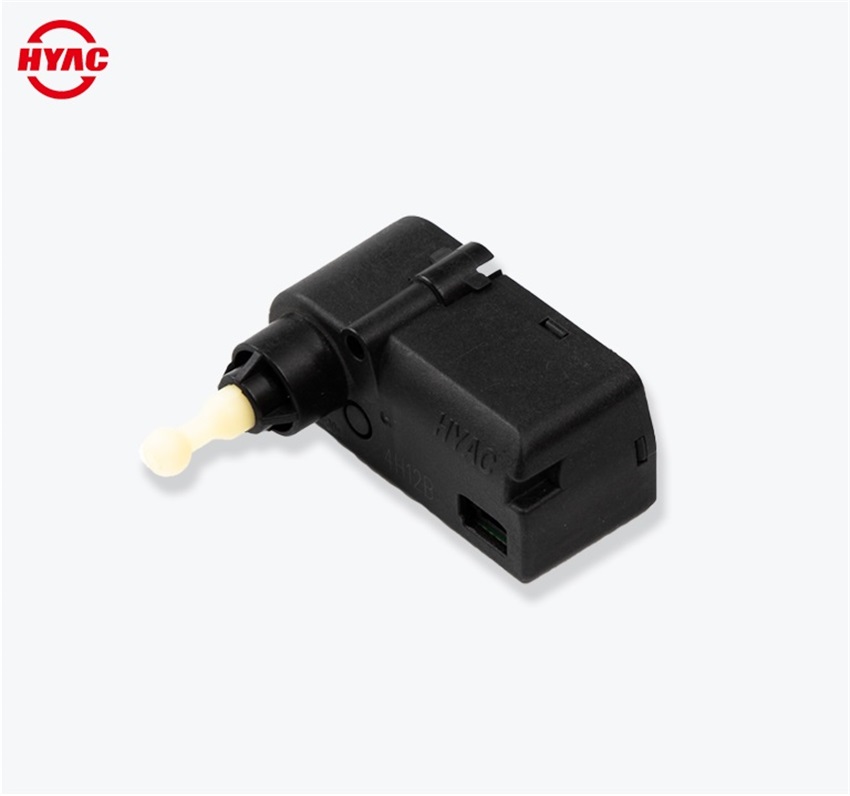
That said,stepper motors are generally more complex and costly than DC motors.They require more sophisticated control electronics and careful calibration during installation.For cost-sensitive projects or basic manual adjustment systems,this added complexity may not be justified.Additionally,stepper motors can be slightly larger,which may pose challenges in compact headlight designs.
Durability is an important consideration for both motor types.A High-Quality Headlight Adjustment Motor,whether DC or stepper,must withstand vibration,temperature changes,and long operating cycles.Advances in motor design and materials have improved the longevity of both types,but proper sealing and quality manufacturing remain essential factors regardless of motor choice.
From a sourcing perspective,the choice between DC and stepper motors often depends on the target market and vehicle segment.Entry-level and mid-range vehicles may favor DC motor solutions for their affordability and simplicity.In contrast,higher-end vehicles and OEM projects with strict performance requirements often prefer stepper motor–based headlight leveling motors for their precision and reliability.
Ultimately,there is no one-size-fits-all answer.The best headlamp adjustment motor is the one that aligns with the vehicle’s lighting system design,regulatory requirements,and cost targets.Evaluating factors such as control accuracy,system complexity,long-term reliability,and installation requirements will help determine whether a DC motor or stepper motor is the right choice.
In conclusion,both DC motors and stepper motors have proven their value in headlight adjustment applications.DC motor–based solutions offer simplicity and cost efficiency,while stepper motor–based headlight leveling motors deliver superior precision and control.By carefully assessing the specific needs of each project,manufacturers and buyers can select the optimal motor solution to ensure safe,reliable,and compliant headlight performance.

Mr. Hansol Kim