


Please Leave Us A Message

Haoyong Automotive Controls
In today’s fast-evolving industrial automation environment,standard solutions are not always enough.Many engineers,procurement managers,and OEM manufacturers often ask:can an ac actuator be customized for special applications?The answer is yes—and in many industries,customization is not just optional,but essential for operational safety,performance optimization,and long-term reliability.
An ac actuator is widely used in valve automation,HVAC control systems,water treatment facilities,power plants,and industrial production lines.While off-the-shelf models can meet general requirements,real-world applications often involve unique environmental conditions,torque demands,mounting constraints,or control system integrations.That is where a customized ac actuator becomes critical.
One of the most common customization requests relates to torque output.Different valves—such as butterfly valves,ball valves,and gate valves—require different torque levels depending on size,pressure rating,and media type.A properly customized ac actuator ensures that torque output matches the application precisely,avoiding underpowered failures or oversized energy waste.Manufacturers can adjust motor power,gear ratios,and internal transmission systems to meet exact torque specifications.
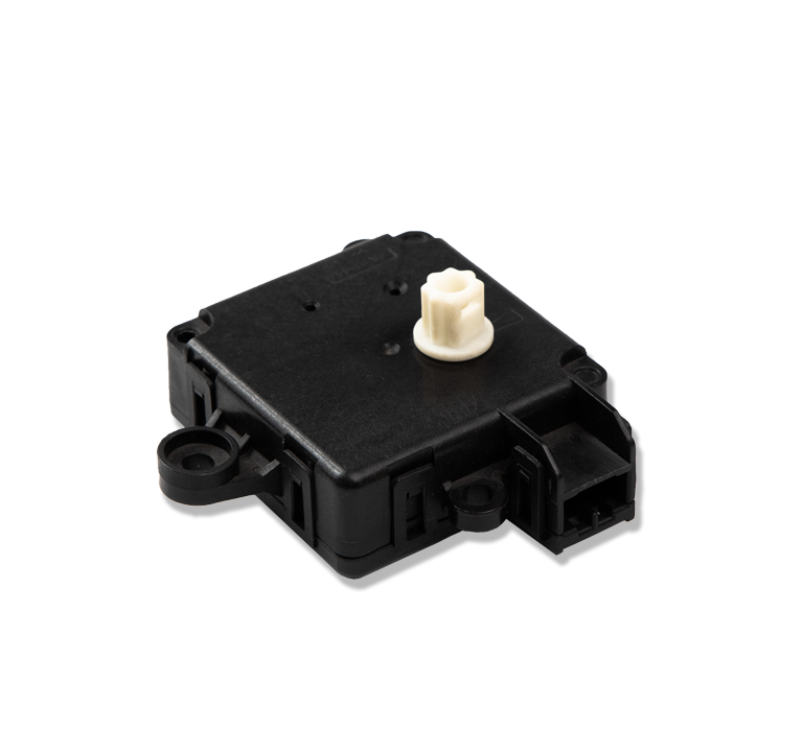
Voltage and frequency adaptation is another important factor.While 110V,220V,and 380V AC are common standards,industrial projects in different countries may require specific voltage configurations.A customized ac actuator can be designed to comply with local power supply standards,ensuring seamless integration into existing systems without additional transformers or converters.
Control system compatibility also drives customization demand.Some applications require simple on/off control,while others demand modulating control with precise positioning accuracy.In such cases,the ac actuator can be configured with 4-20mA,0-10V,or digital communication protocols such as Modbus.For smart factory environments,integrating feedback signals and remote monitoring capabilities into the ac actuator significantly enhances automation efficiency.
Environmental conditions often define the need for structural customization.Applications in offshore platforms,chemical plants,mining operations,or desert solar projects expose equipment to extreme temperatures,corrosive environments,and high humidity.A customized ac actuator may include special corrosion-resistant coatings,stainless steel housings,anti-condensation heaters,or reinforced seals.In explosive atmospheres,explosion-proof certification becomes mandatory,and manufacturers can design ac actuator units that comply with ATEX or other international safety standards.
Mounting configuration is another area where customization plays a major role.Limited installation space,unique flange standards,or special shaft interfaces may require non-standard dimensions.A professional ac actuator manufacturer can adjust mounting brackets,output shaft design,and flange connections to fit existing valve structures without requiring costly system redesign.
Speed adjustment is also a frequent request.Some processes require rapid opening and closing,while others demand slow and controlled movement to prevent water hammer or pressure shock.By optimizing motor speed and gear transmission ratio,a customized ac actuator can achieve the ideal operating time for the specific process.
In OEM cooperation projects,branding and design customization are equally important.Many international buyers require private labeling,specific color schemes,logo printing,and packaging customization.A reliable ac actuator supplier typically offers flexible OEM services to help distributors strengthen their brand presence in local markets.
Safety features can also be customized according to project requirements.For critical applications such as power generation or emergency shut-off systems,fail-safe mechanisms like spring return systems or battery backup modules can be integrated into the ac actuator.These features ensure the actuator moves to a predefined safe position during power failure,reducing operational risks.
When considering customization,buyers often worry about lead time and cost.In reality,working with an experienced ac actuator manufacturer can minimize these concerns.Engineering teams can evaluate technical drawings,analyze torque calculations,and propose optimized solutions that balance performance and cost efficiency.In many cases,customized solutions actually reduce long-term maintenance expenses and downtime,resulting in a better return on investment.
Choosing the right partner is essential.A professional ac actuator factory should provide technical consultation,3D drawings,torque charts,material selection guidance,and quality testing reports.Certifications,production capacity,and export experience are key factors that ensure smooth international cooperation.
Ultimately,the ability to customize an ac actuator for special applications is what differentiates a reliable manufacturer from a generic supplier.Whether the requirement involves higher torque,smarter control integration,extreme environment resistance,or special mounting structures,customization ensures that the actuator fits the system—not the other way around.
For industrial buyers seeking long-term performance and stable operation,investing in a customized ac actuator solution is not an added expense but a strategic decision that improves reliability,safety,and operational efficiency.

Mr. Hansol Kim