


Please Leave Us A Message

Haoyong Automotive Controls
A Mirror Actuator in car mirror adjustment systems is an electric device installed inside a vehicle side mirror that controls the movement of the mirror glass, allowing drivers to adjust viewing angles up, down, left, and right using interior switches.
This component is commonly used in modern vehicles and is also known as a power mirror actuator. It replaces manual adjustment mechanisms and provides more precise, convenient, and safer mirror positioning while driving.
In automotive design, the actuator is typically embedded inside the side mirror housing and works through small electric motors connected to a gear system that converts motor rotation into controlled mirror movement.
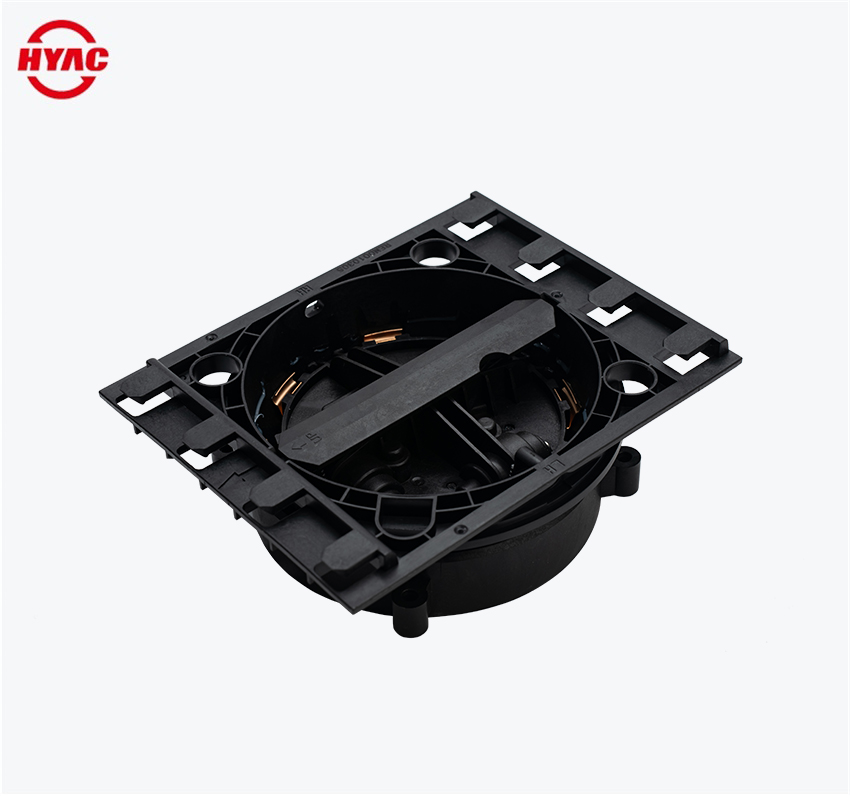
When the driver presses the mirror adjustment button, an electrical signal is sent to the actuator. Inside the unit, micro motors activate and drive a gear mechanism that moves the mirror in the required direction.
Most systems use two motors: one for vertical movement and one for horizontal movement. This allows precise dual-axis control.
In advanced vehicles, especially those using a wing mirror actuator design, the system may also support folding, heating, and memory positioning functions.
DC micro motors
Gear transmission system
Control circuit board
Mirror mounting base
Positioning structure
Mirror actuators are widely used in passenger cars, commercial vehicles, and electric vehicles. The power mirror actuator system improves driving safety by allowing real-time mirror adjustments without manual intervention.
Typical problems include motor failure, gear wear, and electrical malfunction, which may result in slow or unresponsive mirror movement.
A mirror actuator is a key automotive component that enables precise and automated side mirror adjustment. It improves safety, comfort, and driving efficiency in modern vehicles.
A mirror actuator is an electric device used in vehicle side mirrors that controls the movement of the mirror glass for precise angle adjustment. It allows drivers to adjust the mirror position up, down, left, and right using interior control switches.
The main purpose of an actuator is to convert electrical signals into mechanical motion in order to control movement in machines, systems, or devices. It enables automated and precise motion control.
The four main types of actuators are electric, hydraulic, pneumatic, and mechanical actuators. Each type converts energy into motion in different ways depending on application requirements.
Electric actuator: Uses electrical energy to produce precise and controlled movement.
Hydraulic actuator: Uses pressurized fluid to generate high force output.
Pneumatic actuator: Uses compressed air for fast and lightweight motion.
Mechanical actuator: Uses gears, levers, or mechanical linkages to create movement.
Power mirrors may stop working due to electrical failure, motor damage, wiring issues, or worn-out actuator gears inside the mirror assembly.
Blown fuse in the electrical system
Faulty Mirror Actuator Motor
Damaged or loose wiring connections
Broken or worn gear mechanism
Defective mirror control switch

Mr. Hansol Kim