


Please Leave Us A Message
Haoyong Automotive Controls
Two common ways to classify actuators are by their motion type: linear actuators and rotary actuators. A linear actuator produces straight-line movement, while a rotary actuator produces rotational or angular movement. Actuators can also be classified by their power source, such as electric, pneumatic, and hydraulic actuators. In industrial automation, choosing between different actuator types depends on the required motion, load, speed, precision, operating environment, and control method. Understanding these differences helps engineers and buyers select a suitable actuator for machinery, robotics, production equipment, and automated systems.
An actuator is a device that converts an energy source into controlled mechanical movement. It receives an input, such as electrical power, compressed air, or hydraulic pressure, and generates force or torque to move a connected mechanical component.
Actuators are essential components in automation because control systems need a physical mechanism to execute movement. A PLC, computer, sensor, or motion controller can determine what needs to happen, while the actuator provides the physical movement required to complete the operation.
For example, an automated machine may use a sensor to detect a product, a controller to process the signal, and an actuator to move a mechanism into the required position.
A linear actuator generates motion along a straight line. It can extend and retract, push and pull, lift a load, or position a component at a specific location.
Linear actuators are available in several designs. Electric linear actuators commonly use a motor combined with a screw, ball screw, lead screw, belt, or other transmission mechanism. Pneumatic and hydraulic cylinders are also widely used to generate linear movement.
An electric linear actuator typically starts with an electric motor. The motor generates rotational motion, which is transferred through a mechanical transmission system. A screw mechanism can convert this rotational movement into linear movement, causing the actuator rod or carriage to extend or retract.
Depending on the design, sensors or encoders can provide position feedback. This allows the control system to determine whether the actuator has reached the required position.
Linear actuators are commonly used in:
Industrial automation equipment
Robotic positioning systems
Packaging machinery
Material-handling equipment
Adjustable workstations
Medical equipment
Automated production lines
Agricultural machinery
Lift and adjustment systems
They are particularly useful when an application requires controlled movement over a defined stroke length.
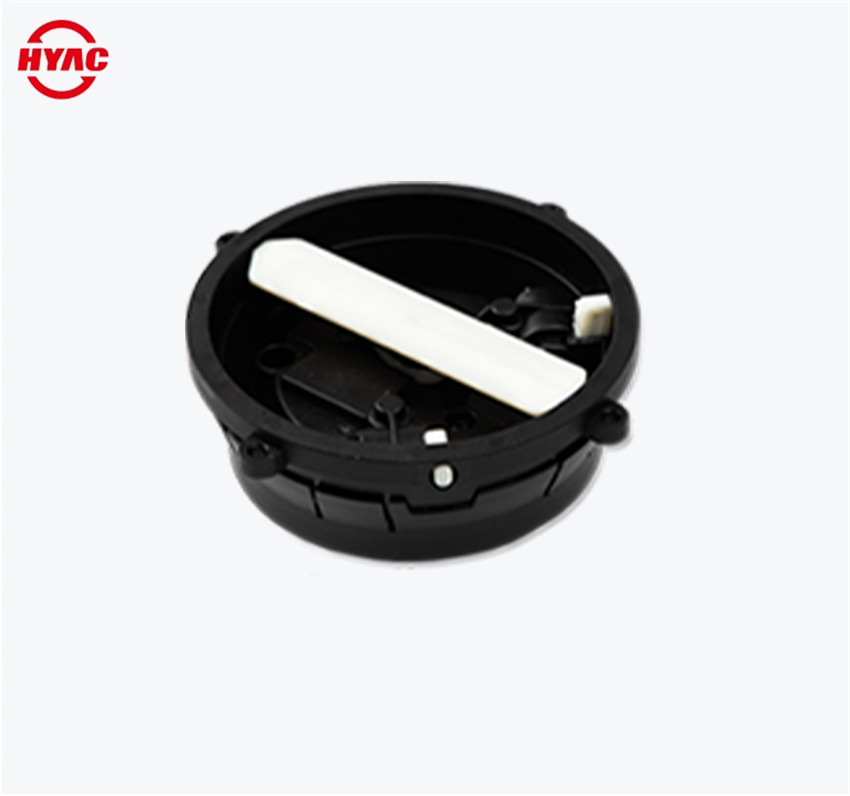
A rotary actuator produces rotational movement around an axis. Instead of moving a component forward and backward along a straight path, a rotary actuator generates angular motion.
Rotary actuators may use electric motors, pneumatic systems, hydraulic systems, gears, or other mechanical mechanisms. The appropriate design depends on the required torque, rotation angle, speed, and control requirements.
An electric rotary actuator may use an electric motor to generate torque. A gearbox can then modify the output speed and increase the available torque. The resulting rotational movement can be used to rotate a shaft, arm, valve, platform, or other mechanical component.
Some rotary actuator systems provide continuous rotation, while others are designed for a specific angular range, such as 90 degrees or 180 degrees. Position feedback can also be integrated when accurate angular positioning is required.
Rotary actuators are commonly used in:
Robotic arms
Automated valves
Rotary indexing systems
Industrial machinery
Assembly equipment
Material-handling systems
Packaging machines
Process-control equipment
They are suitable for applications where a component needs to rotate, pivot, index, or change angular position.
The fundamental difference between the two actuator types is the movement they produce.
| Feature | Linear Actuator | Rotary Actuator |
|---|---|---|
| Motion | Straight-line movement | Rotational movement |
| Typical output | Linear force | Torque |
| Common functions | Push, pull, lift, position | Rotate, pivot, index, turn |
| Typical applications | Positioning and lifting systems | Robotic joints and rotary mechanisms |
Although linear and rotary actuators are two major motion-based categories, actuators can also be classified according to their energy source.
Electric actuators use electrical energy to produce mechanical movement. They are widely used in modern automation because they can offer precise positioning, programmable motion, and straightforward integration with electronic control systems.
Electric actuator designs can include motors, screws, gearboxes, encoders, limit switches, and control electronics.
Pneumatic actuators use compressed air to generate movement. They are widely used in factory automation, especially where fast repetitive motion is required.
Pneumatic systems can provide relatively simple and fast actuation, although they require a suitable compressed-air supply and associated pneumatic components.
Hydraulic actuators use pressurized fluid to generate high mechanical force. They are often selected for heavy-duty machinery and applications requiring high force or load-handling capability.
Choosing an actuator should begin with the movement and load requirements of the application. Important specifications include:
Motion type: Determine whether the application requires linear or rotary movement.
Load or torque: Calculate the force or torque required to move the mechanism.
Stroke or rotation angle: Define the required travel distance or angular range.
Speed: Confirm the required movement speed and acceleration.
Accuracy: Determine the required positioning accuracy and repeatability.
Duty cycle: Evaluate how often the actuator will operate.
Environment: Consider temperature, dust, moisture, vibration, and other conditions.
Control: Check compatibility with PLCs, controllers, sensors, and communication systems.
For customized industrial applications, these specifications should be discussed with an experienced actuator manufacturer or actuator supplier before final selection.
OEM buyers and machine builders may require actuators with customized dimensions, mounting configurations, stroke lengths, speeds, connectors, or control options. Working directly with an actuator manufacturer can make it easier to discuss these requirements.
An experienced actuator factory may also provide engineering support, prototype development, product testing, production documentation, and volume manufacturing. Buyers should evaluate technical capability, quality management, production capacity, customization experience, and delivery requirements when selecting a supplier.
When classified by motion, the two main types are linear actuators and rotary actuators. Linear actuators produce straight-line movement, while rotary actuators produce rotational movement.
There is no single actuator that is most suitable for every application. Electric, pneumatic, and hydraulic actuators are all widely used, with the choice depending on the machine design and operating requirements.
An electric motor can serve as the driving component of an actuator, but a complete electric actuator may contain additional mechanical and control components that convert motor output into the required controlled movement.
An electric actuator uses electrical energy, while a pneumatic actuator uses compressed air. Electric systems are often selected for precise programmable positioning, while pneumatic systems are widely used for fast repetitive movements in factory automation.
Compare suppliers based on technical specifications, product quality, customization capability, production capacity, testing procedures, lead time, certifications where applicable, and technical support. For OEM projects, direct communication with the actuator manufacturer can also help ensure that the selected actuator matches the machine requirements.
The two primary actuator types based on motion are linear actuators and rotary actuators. Linear actuators provide straight-line movement for pushing, pulling, lifting, and positioning, while rotary actuators provide angular movement for turning, pivoting, and indexing. Beyond motion type, actuators can also be classified as electric, pneumatic, or hydraulic according to their power source. Understanding these classifications and evaluating load, speed, stroke, accuracy, duty cycle, and environmental requirements can help engineers select the appropriate actuator for industrial automation and OEM applications.

Mr. Hansol Kim