


Please Leave Us A Message

Haoyong Automotive Controls
In modern HVAC systems,precise control over airflow and temperature is essential for achieving comfort,energy efficiency,and system reliability.One of the key devices that makes this control possible is the air conditioner actuator.Although it is often a small component compared to compressors or fans,the actuator plays a critical role in damper control,airflow regulation,and overall system automation.
Understanding the main components of an air conditioner actuator helps buyers,engineers,and HVAC integrators evaluate product quality,select the right model,and ensure long-term performance in real-world applications.
The Role of an Air Conditioner Actuator in an HVAC System
An air conditioner actuator is designed to convert electrical control signals into mechanical motion.This motion is used to open,close,or modulate dampers,valves,or louvers inside an HVAC system.By doing so,the actuator directly influences airflow regulation and temperature distribution across different zones.
Whether used in residential units,commercial buildings,or industrial HVAC installations,the actuator ensures that conditioned air is delivered accurately where and when it is needed.To achieve this,several internal components must work together seamlessly.
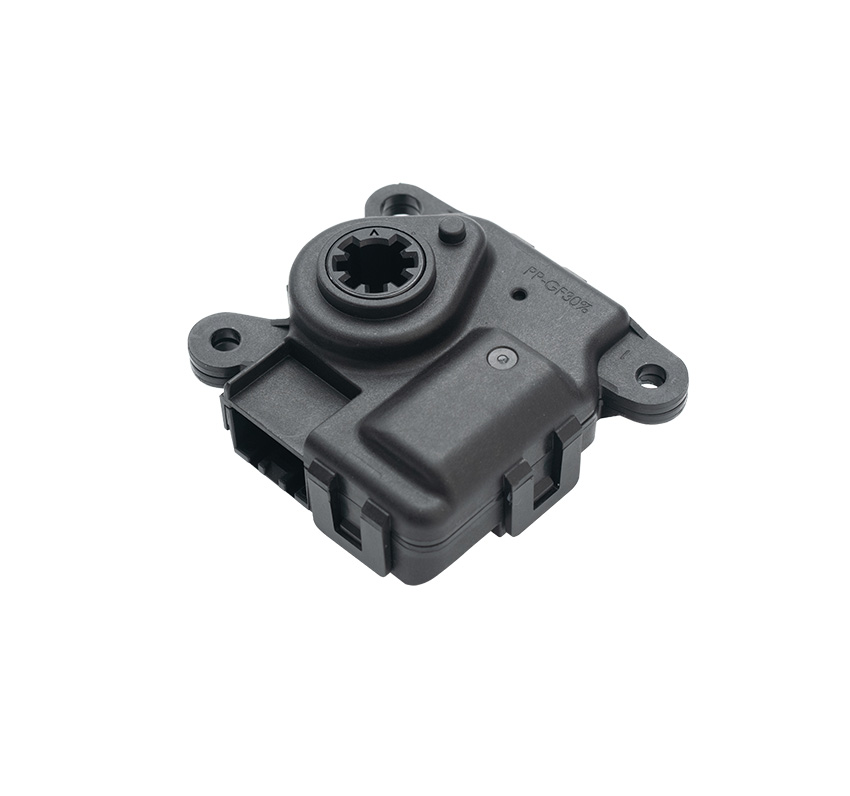
Electric Motor:The Driving Force
At the heart of every air conditioner actuator is an electric motor.The motor provides the mechanical energy required to move the damper or valve connected to the actuator shaft.Depending on the application,this motor may be AC or DC,synchronous or asynchronous,and designed for continuous or intermittent operation.
In HVAC systems,motors used in actuators are optimized for torque,reliability,and quiet operation rather than high speed.Stable motor performance is essential for accurate damper control and smooth airflow regulation,especially in systems that rely on frequent adjustments to maintain indoor comfort.
Gear Train:Converting Speed into Torque
Because electric motors typically operate at relatively high speeds with low torque,a gear train is used to reduce speed and increase torque.This gear mechanism allows the actuator to move dampers precisely and hold them firmly in position,even under air pressure loads.
The quality of the gear train has a direct impact on the actuator’s lifespan and positioning accuracy.Metal gears are often preferred in commercial HVAC systems,while reinforced engineering plastics may be sufficient for lighter-duty applications.A well-designed gear system ensures reliable airflow regulation and minimizes backlash during damper control.
Control Circuit Board:The Brain of the Actuator
The control circuit board processes incoming signals from thermostats,building management systems,or HVAC controllers.These signals determine how and when the actuator should move.In many applications,the actuator functions as a temperature control actuator,responding to real-time feedback to maintain target conditions.
Modern control boards may support multiple input signals such as on/off,floating control,or proportional signals(0–10V or 4–20mA).Advanced designs also include overload protection,position feedback,and fault detection to improve system safety and reliability within an HVAC system.
Output Shaft and Coupling Mechanism
The output shaft transfers motion from the internal gear train to the external damper or valve.This component must be mechanically robust and precisely aligned to ensure accurate damper control.Depending on installation requirements,shafts may be round,square,or keyed.
Coupling mechanisms allow the actuator to be securely mounted to dampers while accommodating minor misalignments.Proper shaft design is essential for consistent airflow regulation and for preventing mechanical wear over long operating cycles.
Housing and Enclosure
The actuator housing protects all internal components from dust,moisture,and temperature variations.In commercial HVAC systems,housings are often made from die-cast aluminum or high-strength plastic to ensure durability and heat resistance.
Ingress protection ratings are particularly important when actuators are installed in harsh environments such as rooftop units or industrial facilities.A well-sealed enclosure contributes to long service life and stable performance in temperature control actuator applications.
Position Feedback and Sensors
Many air conditioner actuators include internal sensors or feedback potentiometers that monitor shaft position.This feedback allows the control system to verify damper position and make fine adjustments as needed.
Position feedback is critical in advanced HVAC systems that rely on precise airflow regulation and zoning.It also supports diagnostics and maintenance by identifying performance deviations before they lead to system failure.
Power Supply and Wiring Interface
The power supply section ensures stable voltage delivery to the motor and control electronics.Actuators may be designed for 24V,110V,or 230V systems depending on regional standards and application needs.
Clear and secure wiring interfaces simplify installation and reduce the risk of connection errors.Reliable power delivery is fundamental to consistent damper control and dependable operation within an HVAC system.
Why Component Quality Matters
Each component of an air conditioner actuator contributes directly to system accuracy,durability,and energy efficiency.Poor-quality motors,gears,or control boards can lead to positioning errors,unstable airflow regulation,and increased maintenance costs.
For HVAC professionals and B2B buyers,evaluating actuator components is just as important as checking specifications.High-quality components ensure smooth temperature control actuator performance and long-term reliability in demanding HVAC environments.
Conclusion
An air conditioner actuator may appear simple from the outside,but internally it is a carefully engineered assembly of motors,gears,electronics,and mechanical interfaces.Together,these components enable precise damper control,efficient airflow regulation,and responsive temperature management within an HVAC system.
Understanding these components allows buyers and system designers to make informed decisions,optimize system performance,and select actuators that deliver consistent results across a wide range of HVAC applications.

Mr. Hansol Kim