


Please Leave Us A Message

Haoyong Automotive Controls
HVAC systems vary significantly depending on where they are used.Residential homes,office buildings,factories,and industrial plants all have different performance expectations,operating environments,and control requirements.As a result,the HVAC Actuator used in each system must be carefully matched to its application.Comparing HVAC Actuators for residential and industrial HVAC systems highlights how design priorities shift based on scale,complexity,and reliability demands.
In residential HVAC systems,the primary goal is comfort.Homeowners expect stable temperature control,quiet operation,and minimal maintenance.HVAC Actuators in residential settings are typically used for zone dampers,air distribution control,and small ventilation adjustments.These systems operate at lower torque requirements and under relatively stable environmental conditions.
Residential HVAC Actuators are often compact,lightweight,and designed for straightforward installation.Many are non-spring return HVAC actuators,as residential systems usually do not require fail-safe positioning during power outages.If power is lost,the temporary interruption is acceptable,and normal operation resumes once electricity is restored.Energy efficiency and noise reduction are major considerations,influencing actuator motor selection and housing design.
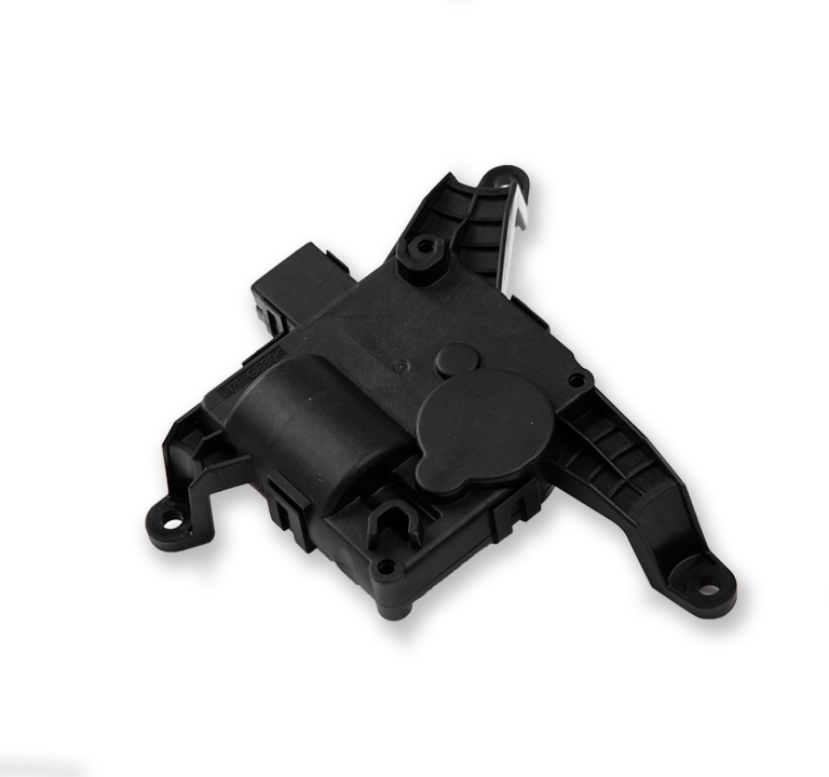
In contrast,industrial HVAC systems operate in far more demanding environments.Factories,warehouses,data centers,and processing plants require precise airflow control,continuous operation,and resistance to harsh conditions such as dust,humidity,vibration,or temperature extremes.The HVAC Actuator in these systems must deliver higher torque to control large dampers and valves while maintaining long-term reliability.
Industrial HVAC actuators are often built with reinforced housings,metal gears,and higher protection ratings.Spring return HVAC actuators are more commonly used in industrial environments,especially where safety regulations require dampers to move to a defined position during emergencies.Smoke extraction systems,explosion-proof ventilation,and critical process airflow all rely on predictable actuator behavior under fault conditions.
Another key difference lies in control complexity.Residential HVAC actuators typically operate using simple on/off or basic modulating signals integrated into smart thermostats or home automation platforms.Industrial HVAC actuators are designed to integrate seamlessly with building management systems and industrial control networks.These systems require precise feedback,stable positioning,and compatibility with advanced control strategies.
Maintenance expectations also vary.Residential HVAC actuators are generally designed for long service life with minimal maintenance,as homeowners prefer maintenance-free solutions.Industrial HVAC actuators,while also built for durability,are expected to be serviceable.Components may be inspected,replaced,or recalibrated as part of routine facility maintenance programs.
Cost considerations differ significantly between residential and industrial applications.Residential HVAC actuators are cost-sensitive and produced in high volumes,emphasizing affordability and standardization.Industrial HVAC actuators prioritize performance,reliability,and compliance over initial cost.Buyers in industrial markets often focus on total cost of ownership,factoring in downtime risk,maintenance intervals,and system efficiency.
Environmental adaptability further distinguishes industrial HVAC actuators.Exposure to corrosive air,chemical fumes,or outdoor installation demands specialized materials and sealing methods.Residential HVAC actuators rarely face such extreme conditions,allowing for simpler designs and materials.
Despite these differences,both residential and industrial HVAC systems rely on the same fundamental principle:accurate and reliable airflow control.Choosing the correct HVAC Actuator ensures that the system performs as intended,whether maintaining comfort in a home or safeguarding operations in an industrial facility.
For manufacturers and OEM buyers,understanding these distinctions helps align product selection with real-world application needs.Matching actuator design to system requirements not only improves performance but also extends service life and enhances overall system efficiency.

Mr. Hansol Kim