


Please Leave Us A Message

Haoyong Automotive Controls
The structure of a Mirror Actuator system is a compact combination of electric motors, gear mechanisms, and electronic control components that work together to adjust the position of a vehicle’s side mirror accurately and smoothly.
This structure is used in both standard power Mirror Actuator systems and advanced wing mirror actuator designs, depending on vehicle type and functionality requirements.
All components are integrated into a single housing unit inside the side mirror assembly to ensure durability, stability, and precise motion control.
A mirror actuator system is made up of several key structural parts that work together to achieve controlled mirror movement.
Electric drive motors
Gear reduction mechanism
Housing shell
Control circuit module
Mirror connection joint
Most systems include two small DC motors. One controls vertical movement, and the other controls horizontal movement, forming a dual-axis adjustment system.
In advanced power mirror actuator systems, stepper motors may be used for higher precision control.
The gear system converts motor rotation into controlled movement of the mirror glass. It reduces speed while increasing torque to ensure stable and smooth adjustment.
High-quality materials such as reinforced plastics or composite polymers are often used to improve durability and reduce noise.
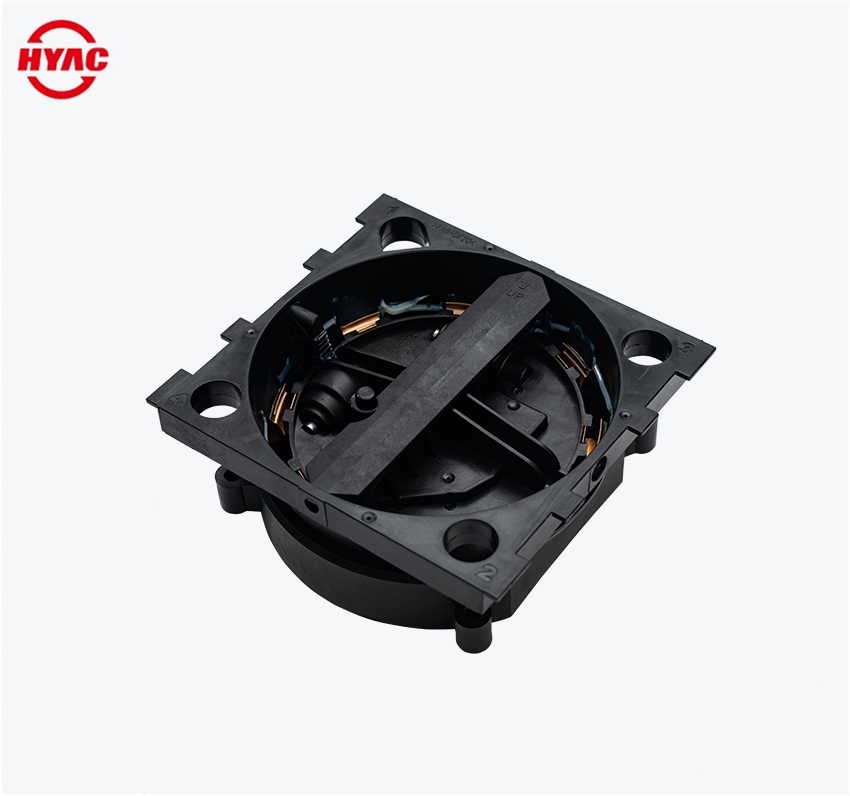
The housing protects internal components from heat, vibration, moisture, and dust. It also ensures proper alignment of the actuator system inside the mirror assembly.
In a wing mirror actuator, aerodynamic design is also considered to reduce wind resistance and noise.
The control module processes signals from the driver’s mirror adjustment switch and sends commands to the motors.
Some advanced systems integrate memory settings, heating functions, and automatic folding features within the same module.
Modern mirror actuator structures are often connected to vehicle electronic systems such as central locking, blind spot detection, and parking assistance systems.
An actuator is used to convert energy (usually electrical, pneumatic, or hydraulic) into mechanical movement, enabling machines or systems to perform controlled motion such as pushing, pulling, rotating, or adjusting components.
Actuators can be either AC or DC depending on the application. DC actuators are more commonly used in small devices and automotive systems, while AC actuators are often used in industrial machinery that requires higher power and continuous operation.
The most commonly used actuators are electric DC actuators because they are compact, cost-effective, easy to control, and widely applied in automotive systems, robotics, and consumer electronics.

Mr. Hansol Kim