


Please Leave Us A Message

Haoyong Automotive Controls
A Headlamp Actuator is a key component in a vehicle's headlight adjustment system. It allows the headlamp to move to a specific position so that the light beam is aimed correctly. Depending on the vehicle design, the actuator may control vertical or horizontal headlamp movement, support automatic leveling, or work with an adaptive lighting system.
When a Headlamp Actuator fails, the headlight may become stuck, move incorrectly, make unusual noises, or fail to maintain its intended position. In some vehicles, a failed actuator can also trigger a dashboard warning or affect the performance of the automatic headlight leveling system. Because proper headlight positioning is important for effective road illumination, understanding common actuator problems can help identify the issue before replacing unnecessary components.
A headlamp actuator is essentially a small mechanical or electromechanical device that changes the position of a headlight assembly or an internal reflector. It receives a control signal and converts it into mechanical movement. Depending on the application, this movement can raise, lower, tilt, or otherwise reposition the headlamp.
In a conventional headlight system, the actuator may be controlled manually through a leveling switch. In more advanced vehicles, it can receive signals from sensors and an electronic control module. The system can then adjust the headlight angle according to vehicle load, suspension movement, road conditions, or other operating parameters.
The exact design varies between vehicle models. Some actuators use an electric motor and gear mechanism, while others incorporate a screw drive, linkage, or position feedback system. This is why replacement parts should be selected according to the vehicle's headlamp assembly and actuator specifications rather than appearance alone.
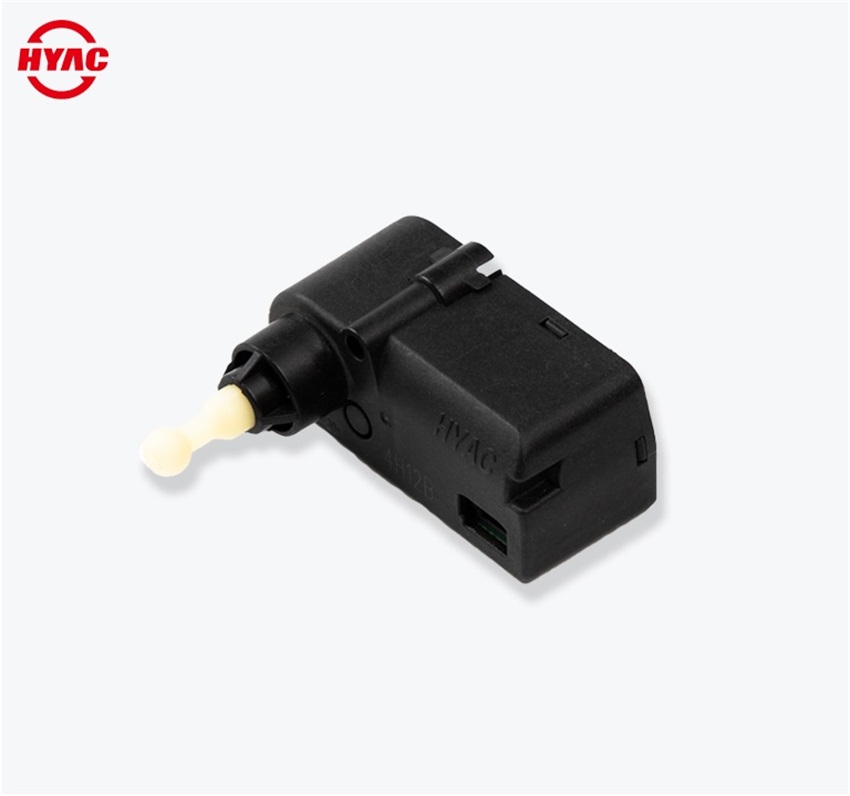
A Headlamp Actuator Failure can produce several noticeable symptoms. The specific signs depend on the actuator design and the type of headlight system in the vehicle.
1. The headlamp does not move. If the actuator is no longer receiving power or its internal motor or mechanism has failed, the headlamp may remain fixed in one position. Changing the headlight adjustment setting may have no visible effect.
2. The headlamp is stuck in the wrong position. An actuator can fail while the headlight is positioned too high, too low, or at an incorrect horizontal angle. The headlamp may still produce light, but the beam pattern may not be correctly aligned.
3. The headlamp moves irregularly. A worn gear, damaged linkage, electrical problem, or faulty position sensor can cause inconsistent movement. The headlight may move slowly, stop partway, or change position unexpectedly.
4. Unusual clicking or grinding sounds. Repeated clicking, buzzing, or grinding when the headlamp adjustment system operates can indicate worn gears, a damaged actuator mechanism, or an obstruction in the adjustment assembly.
5. Automatic leveling does not work correctly. Vehicles equipped with automatic headlight leveling may show an error or fail to compensate for changes in vehicle position when an actuator or related component malfunctions.
6. The headlight beam appears uneven. If one headlamp points differently from the other, the actuator may not be positioning the lamp correctly. However, incorrect alignment can also result from mounting damage or manual adjustment issues, so the actuator should not be assumed to be the cause without inspection.
There are several potential causes of Headlamp Actuator Problems. Electrical faults are one common source. A damaged connector, broken wire, poor ground connection, blown fuse, or control signal problem can prevent the actuator from operating even when the mechanical mechanism itself is functional.
Mechanical wear is another possibility. Internal gears and moving components can gradually wear after repeated operation. If a gear becomes damaged or the mechanism becomes stuck, the actuator may produce abnormal sounds or fail to move the headlamp.
Moisture and contamination can also contribute to actuator failure. If water enters the actuator housing or electrical connection, corrosion can affect internal components and electrical contacts. In addition, physical impact or damage to the headlamp assembly can place excessive force on the actuator or its mounting points.
Temperature changes, vibration, and long-term vehicle use can also contribute to component degradation. Therefore, diagnosing the complete headlight adjustment system is important before installing a replacement actuator.
Yes. A failed headlamp actuator can affect headlight alignment when the actuator is responsible for positioning the lamp or reflector. If the actuator stops at an incorrect position, the light beam may be directed too high, too low, or away from the intended area.
A beam that is positioned too low may reduce the illuminated area in front of the vehicle, while a beam positioned too high can create excessive glare for other road users. However, headlight alignment problems are not always caused by the actuator. Damaged mounting brackets, incorrect installation, suspension changes, or other components can produce similar symptoms.
For this reason, the actuator, wiring, mounting system, and headlamp assembly should be checked together when abnormal beam positioning is observed.
Testing methods vary depending on the vehicle and actuator design. A basic inspection can begin by checking whether the actuator responds when the headlamp adjustment control is operated. If there is no movement or sound, the electrical supply and connector should be inspected.
A technician may also check the relevant fuse, wiring, ground connection, and control signal. If power reaches the actuator but the mechanism does not operate, the actuator itself may be defective. If the actuator operates but the headlamp does not move correctly, the linkage, mounting points, or internal adjustment mechanism may need further inspection.
For vehicles with electronically controlled automatic leveling systems, diagnostic equipment may be required to identify fault codes or check actuator feedback. The manufacturer's service information should be used when determining the correct testing procedure.
Not necessarily. Headlamp actuators are not universally interchangeable, even when two components look similar. Their mounting points, dimensions, electrical connectors, voltage requirements, gear mechanisms, travel range, control signals, and mechanical interfaces can be different.
Some actuators may be compatible across several vehicle models or headlamp assemblies, but compatibility must be confirmed using the appropriate part number and application information. An actuator designed for one headlamp assembly may not provide the correct movement or electrical response when installed on another assembly.
It is also important to distinguish between a replacement actuator and a complete headlamp assembly. Some headlamp designs allow the actuator to be replaced separately, while others may integrate the actuator more closely with the assembly. The serviceability of the component depends on the specific design.
Before starting a Headlamp Actuator Replacement, several factors should be checked. First, confirm the vehicle model, production year, headlamp type, and original actuator part number. This helps prevent compatibility problems.
Next, inspect the electrical connector and wiring. Replacing the actuator will not solve a problem caused by a broken wire, damaged connector, fuse failure, or control module issue. The headlamp mounting points and mechanical linkage should also be examined for damage or obstruction.
After installation, some vehicles may require headlamp alignment or calibration. Vehicles equipped with automatic leveling or adaptive lighting systems may also require a specific initialization procedure. The correct procedure depends on the vehicle manufacturer and lighting system.
The terms headlamp actuator and headlight actuator are often used to describe similar or identical components. “Headlamp” and “headlight” can both refer to the vehicle's front lighting assembly, although terminology varies between manufacturers, regions, and technical documentation.
However, the term alone does not determine compatibility. Two components described as headlight actuators may have completely different designs and applications. Part numbers, technical specifications, mounting dimensions, electrical characteristics, and application data remain more reliable when selecting a replacement component.
A headlamp actuator should generally be considered for replacement when testing confirms that the actuator has an internal mechanical or electrical failure and the component cannot be restored through an appropriate repair procedure. Replacement may also be necessary when the actuator has damaged gears, a failed motor, severe corrosion, or physical damage.
However, replacing the actuator should not be the first step based solely on symptoms. Similar headlight problems can be caused by wiring, control modules, sensors, mounting components, or the headlamp assembly itself. Proper diagnosis helps ensure that the actual source of the problem is addressed.
When a headlamp actuator fails, the headlight may stop moving, become stuck in an incorrect position, produce unusual noises, or fail to operate as part of an automatic leveling system. These problems can affect headlight alignment and overall lighting performance.
Headlamp actuators are also not universally interchangeable. Although some components may fit multiple applications, compatibility should be verified using part numbers, vehicle application data, mounting dimensions, electrical specifications, and the design of the headlamp assembly. Before completing a Headlamp Actuator Replacement, it is important to identify whether the actuator itself is defective or whether another part of the lighting system is responsible for the problem.
Understanding the symptoms, causes, testing methods, and compatibility requirements can make headlamp actuator diagnosis and replacement more efficient while helping ensure that the headlight system maintains the intended adjustment range and operating performance.

Mr. Hansol Kim