


Please Leave Us A Message

Haoyong Automotive Controls
Headlight beam positioning is an important part of modern automotive lighting systems. A headlamp must illuminate the road effectively while keeping the beam correctly positioned for different driving conditions. When the vehicle carries different loads, travels over uneven roads, or experiences changes in its suspension position, the angle of the headlight beam can change. A Headlamp Actuator helps compensate for these changes by mechanically adjusting the position of the headlamp assembly or its internal reflector.
In many vehicles, the actuator works as part of a headlight leveling or beam adjustment system. It receives an electrical signal from a control system and converts that signal into controlled mechanical movement. This allows the headlamp to move vertically or, in some applications, in other directions. Understanding how a Headlamp Actuator works can help explain why it is an important component in modern vehicle lighting systems.
A Headlamp Actuator is an electromechanical component designed to change the position or angle of a vehicle headlamp. Depending on the vehicle design, it may move the entire headlamp assembly or adjust an internal component such as a reflector or projector module.
A typical actuator consists of an electric motor, gears, a drive mechanism, and an output shaft or adjustment mechanism. The motor generates rotational movement, while the internal gear system converts that movement into controlled linear or angular movement. This mechanical movement changes the position of the headlamp beam.
The actuator is commonly connected to a headlight leveling system. In a manual system, the driver may use a dashboard control to request a different beam position. In an automatic system, sensors and an electronic control unit can determine when the headlamp angle needs to be adjusted.
The basic process involves electrical control, motor rotation, mechanical transmission, and headlamp movement. Although the exact design varies between vehicle models, the operating principle is generally similar.
First, the vehicle's lighting or leveling control system determines the required headlamp position. This information may come from a manual adjustment switch, a body control module, a headlight leveling controller, or sensors that monitor vehicle position and suspension movement.
The control system then sends an electrical signal to the Headlamp Actuator Motor. The motor rotates in the required direction. A gear mechanism inside the actuator transfers this rotational movement to the actuator's output mechanism.
The output mechanism then pushes, pulls, or rotates a connected component inside the headlamp assembly. This changes the vertical angle of the reflector or projector and therefore changes the direction of the headlight beam.
When the desired position is reached, the actuator stops moving. Some actuator systems use position feedback to determine the exact location of the headlamp. This allows the control system to make small corrections instead of simply operating the motor for a fixed amount of time.
The Headlamp Actuator Motor is the driving element of the actuator. It is generally a compact electric motor designed to provide controlled movement rather than high-speed rotation.
When electrical power is supplied, the motor rotates. Because a small motor can rotate much faster than the headlamp adjustment mechanism needs to move, gears are typically used to reduce speed and increase the available torque.
The gear train can also provide precise movement. For example, a small rotation of the motor may result in a very small movement of the actuator shaft. This allows the headlamp angle to be adjusted gradually rather than moving abruptly.
In some designs, the actuator incorporates a threaded shaft, worm gear, or similar mechanical transmission. These components can convert motor rotation into linear movement. The linear movement is then transferred to the headlamp reflector or adjustment point.
The direction of motor rotation determines whether the headlamp moves upward or downward. By controlling the motor's direction and operating duration, the system can position the headlight beam at the required angle.
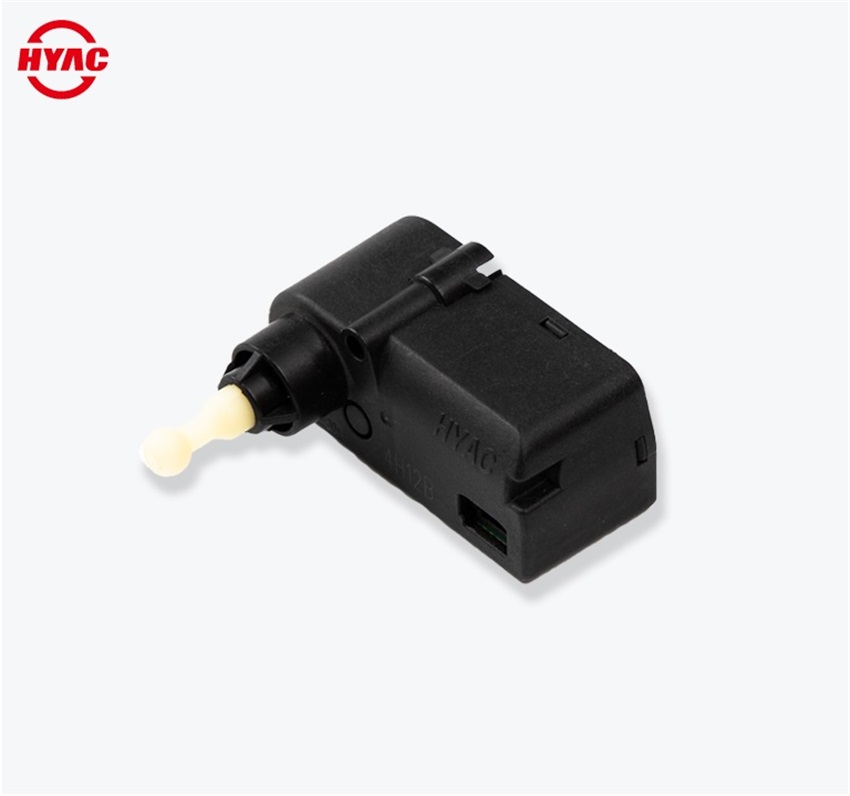
The terms Headlight Actuator and Headlight Actuator Motor are sometimes used interchangeably, but they can refer to slightly different things.
A Headlight Actuator generally refers to the complete adjustment mechanism. It may include the electric motor, gears, housing, output shaft, electrical connection, and other mechanical components.
A Headlight Actuator Motor usually refers specifically to the motor that provides the driving force. In some applications, the motor is integrated into the complete actuator assembly. In other designs, the motor and actuator mechanism may be treated as separate components.
The exact terminology depends on the vehicle manufacturer, headlamp design, and automotive parts supplier. When identifying a replacement component, it is therefore important to check the complete actuator specification rather than relying only on the product name.
Vehicle loading can change the angle of the vehicle body. For example, placing heavy cargo in the rear of a vehicle can cause the rear suspension to compress. As the rear of the vehicle moves downward, the front of the vehicle may point slightly upward.
Without headlamp adjustment, the headlight beam may also point higher than its intended position. A headlamp actuator can help compensate for this change by adjusting the headlamp downward.
In an automatic leveling system, sensors can detect changes in the vehicle's body or suspension position. The control unit processes this information and determines the required actuator movement. The Headlamp Actuator then changes the headlamp angle to maintain an appropriate beam position.
This process can happen automatically and continuously depending on the vehicle's lighting system. The goal is to keep the beam direction appropriate as vehicle conditions change.
Not necessarily. The specific design depends on the headlamp assembly.
In some systems, the actuator changes the position of the entire headlamp housing. In other systems, it moves an internal reflector, projector, or optical module while the outer housing remains fixed.
Internal adjustment can provide precise control without requiring the complete headlamp housing to move. This approach is particularly useful in compact headlamp assemblies where space is limited.
Modern LED and adaptive lighting systems may use multiple actuators or other electronically controlled mechanisms to change the direction or distribution of light. The actuator configuration therefore depends heavily on the vehicle's lighting architecture.
Many basic headlamp actuators are primarily designed for vertical beam adjustment. However, some advanced headlamp systems can provide horizontal adjustment as well.
Horizontal movement may be used in adaptive lighting systems where the direction of the light changes according to steering input, road conditions, or other vehicle parameters. In these systems, additional actuators or integrated mechanisms can control the horizontal position of the lighting module.
Therefore, a Headlamp Actuator should not automatically be assumed to provide both vertical and horizontal adjustment. The actuator's movement range and adjustment direction depend on its mechanical design and the requirements of the headlamp system.
A faulty actuator can prevent the headlamp from reaching the required position. One common symptom is a headlight beam that remains too high or too low even when the vehicle's leveling system requests a change.
Other possible symptoms include unusual clicking or grinding sounds, intermittent headlamp movement, failure of automatic leveling, or a headlight warning message on the vehicle dashboard.
A mechanical problem can occur when gears become worn, damaged, or obstructed. Electrical problems can also affect actuator operation, including issues with wiring, connectors, power supply, control signals, or the motor itself.
Because the actuator is part of a larger lighting system, diagnosing the problem should involve checking both the actuator and the related electrical and control components.
Testing procedures vary depending on the vehicle and actuator design. A basic inspection can begin by checking the actuator connector, wiring, and visible mechanical components.
If the actuator receives the correct electrical signal but does not move, the motor or internal mechanical mechanism may have a problem. If the actuator moves but the headlamp does not change position correctly, the connecting mechanism or internal adjustment components may require inspection.
For vehicles equipped with automatic leveling systems, diagnostic equipment may also be used to check control signals and stored fault information. Position feedback, where available, can help determine whether the actuator is reaching the requested position.
It is important to follow the vehicle manufacturer's service procedures when testing or replacing an actuator because different systems use different electrical configurations and calibration procedures.
Correct headlight alignment affects how effectively the road ahead is illuminated. If the beam is positioned too low, the illuminated area in front of the vehicle can be reduced. If it is positioned too high, the light may not be directed where intended.
A properly functioning Headlamp Actuator helps the lighting system maintain the required beam position when the vehicle's operating conditions change. This makes the actuator an important part of the overall headlamp adjustment mechanism.
For automotive lighting manufacturers and component developers, actuator design requires attention to factors such as movement accuracy, operating range, motor performance, gear durability, electrical compatibility, packaging space, and resistance to the conditions found inside an automotive headlamp assembly.
A Headlamp Actuator adjusts the headlight beam by converting electrical signals into controlled mechanical movement. The actuator motor rotates a gear or drive mechanism, which then moves the reflector, projector module, or headlamp housing to change the beam angle.
In a basic system, the actuator may respond to a manual adjustment command. In an automatic headlight leveling system, it can work together with sensors and electronic control units to compensate for changes in vehicle load and body position. Depending on the headlamp design, the actuator may provide vertical adjustment, horizontal adjustment, or both.
Understanding how the actuator, motor, gears, control system, and headlamp assembly work together is useful when selecting, testing, diagnosing, or replacing an automotive lighting actuator. As vehicle lighting systems become more electronically controlled, precise actuator performance continues to play an important role in headlamp positioning and adjustment.

Mr. Hansol Kim