


Please Leave Us A Message

Haoyong Automotive Controls
In HVAC systems, dampers and actuators are two important components that work together to control airflow. Although they are often used together, they have different functions. A damper controls the movement of air inside the duct system, while an actuator provides the power needed to move the damper. Understanding the difference between them helps HVAC engineers, contractors, and building owners select and maintain the right components for their systems.
A damper is a mechanical device installed inside HVAC ductwork to regulate airflow. It works like a valve that can open, close, or adjust the amount of air passing through the ducts. By controlling airflow, dampers help maintain indoor temperature balance, improve energy efficiency, and support proper ventilation.
Common types of HVAC dampers include:
Volume control dampers: Used to adjust airflow volume in different areas.
Fire dampers: Designed to prevent the spread of fire through duct systems.
Smoke dampers: Used to control smoke movement during emergencies.
Backdraft dampers: Prevent unwanted reverse airflow.
A damper itself does not generate movement automatically. It needs a control mechanism, such as an actuator, to operate.
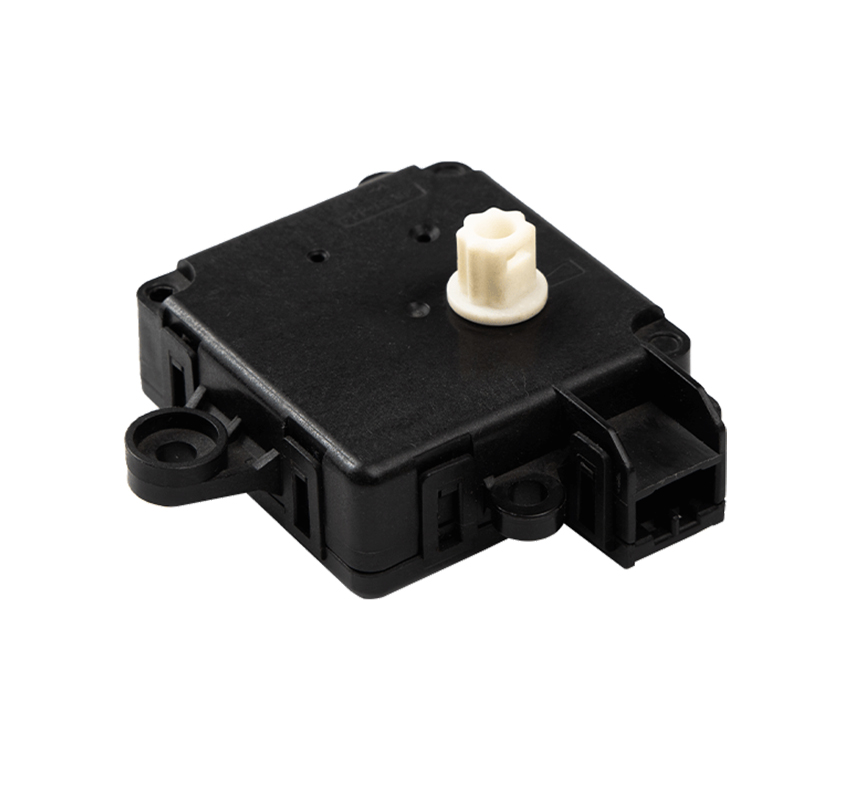
An HVAC Actuator is a device that converts electrical, pneumatic, or thermal energy into mechanical movement. In HVAC applications, actuators are commonly used to open, close, or adjust dampers automatically.
The actuator receives signals from a building automation system (BAS), thermostat, or controller and moves the damper blade to the required position. This allows precise airflow control and helps HVAC systems operate efficiently.
Common types of HVAC Actuators include:
On/off actuators: Open or close dampers completely.
Modulating actuators: Adjust damper position gradually for accurate airflow control.
Spring return actuators: Return the damper to a default position when power is lost.
| Feature | Damper | Actuator |
|---|---|---|
| Main function | Controls airflow | Moves and controls the damper |
| Location | Installed inside HVAC ducts | Mounted on the damper shaft |
| Operation | Physical opening and closing of blades | Provides mechanical movement |
| Power source | Usually requires an actuator | Uses electrical, pneumatic, or thermal energy |
| Control method | Passive airflow regulation | Receives signals from controllers |
| Replacement | Replaced when blades or frames are damaged | Replaced when motor or control system fails |
In a typical HVAC system, the actuator is installed directly onto the damper. When the HVAC controller sends a signal, the actuator rotates or moves the damper blade to adjust airflow.
For example, when a room needs more cooling, the control system sends a signal to the actuator. The actuator opens the damper further, allowing more conditioned air to enter the space. When less airflow is needed, the actuator reduces the damper opening.
This combination allows HVAC systems to achieve better temperature control, improved comfort, and lower energy consumption.
Yes, some manual dampers can operate without actuators. These dampers are adjusted by hand during installation or maintenance. However, modern HVAC systems usually require automatic control, especially in commercial buildings, smart buildings, and large ventilation systems.
For automated HVAC systems, an actuator is necessary because it allows the damper to respond automatically to changing conditions.
When selecting HVAC components, the damper and actuator should be considered as a complete system. Important factors include:
HVAC system size and airflow requirements
Damper type and blade design
Required control method
Voltage requirements (such as 24V or 120V)
Compatibility with building automation systems
Operating environment and temperature conditions
Choosing a compatible actuator ensures that the damper can operate smoothly and maintain accurate airflow control.
The main difference between a damper and an actuator is their role in the HVAC system. A damper controls airflow by adjusting the position of duct blades, while an actuator provides the movement needed to operate the damper automatically. Together, they create an efficient airflow control solution for residential, commercial, and industrial HVAC applications.
Understanding how dampers and HVAC Actuators work together can help improve system performance, reduce energy consumption, and ensure reliable climate control.

Mr. Hansol Kim