


Please Leave Us A Message

Haoyong Automotive Controls
An Air Actuator is a mechanical device that uses compressed air to create linear or rotary motion. It is widely used in industrial automation, manufacturing equipment, material handling systems, packaging machinery, valves, and process control applications. By converting pneumatic energy into mechanical movement, an air actuator allows machines to move, push, pull, lift, clamp, rotate, or position components without relying directly on an electric motor.
The basic idea is simple: compressed air enters the actuator, pressure acts on an internal component such as a piston or diaphragm, and the resulting force produces mechanical motion. Depending on the actuator design, this movement can be linear or rotary.
An air actuator is often selected when a machine requires fast movement, a relatively simple mechanical structure, and a clean source of operating power. Understanding how an actuator works, how it is manufactured, what materials are used, and where it performs best can help engineers select the right solution for an automation system.
The working principle of an air actuator is based on the relationship between compressed air pressure and mechanical force. A typical pneumatic system includes an air compressor, air preparation components, control valves, tubing, and the actuator itself.
Compressed air is first generated by an air compressor and then delivered through pneumatic tubing. Before entering the actuator, the air may pass through a filter, regulator, and lubricator, commonly known as an FRL unit. The regulator controls the working pressure, while the directional control valve determines where the compressed air is sent.
Inside a typical pneumatic actuator, compressed air enters one side of a cylinder chamber. The air pressure acts against a piston, creating a force that moves the piston along the cylinder bore.
The theoretical force can be expressed as:
Force = Pressure × Effective Area
For example, increasing the air pressure or piston area generally increases the available output force. The piston is connected to a piston rod, which transfers the linear movement to an external machine component.
In a double-acting actuator, compressed air is supplied alternately to both sides of the piston. This allows the actuator to generate controlled movement in both directions. In a single-acting design, compressed air produces movement in one direction while a spring provides the return force.
Rotary designs work somewhat differently. A rotary actuator converts compressed air into rotational movement around a shaft. Rack-and-pinion mechanisms and vane mechanisms are common examples. These actuators are particularly useful for opening and closing valves, rotating fixtures, or positioning machine components.
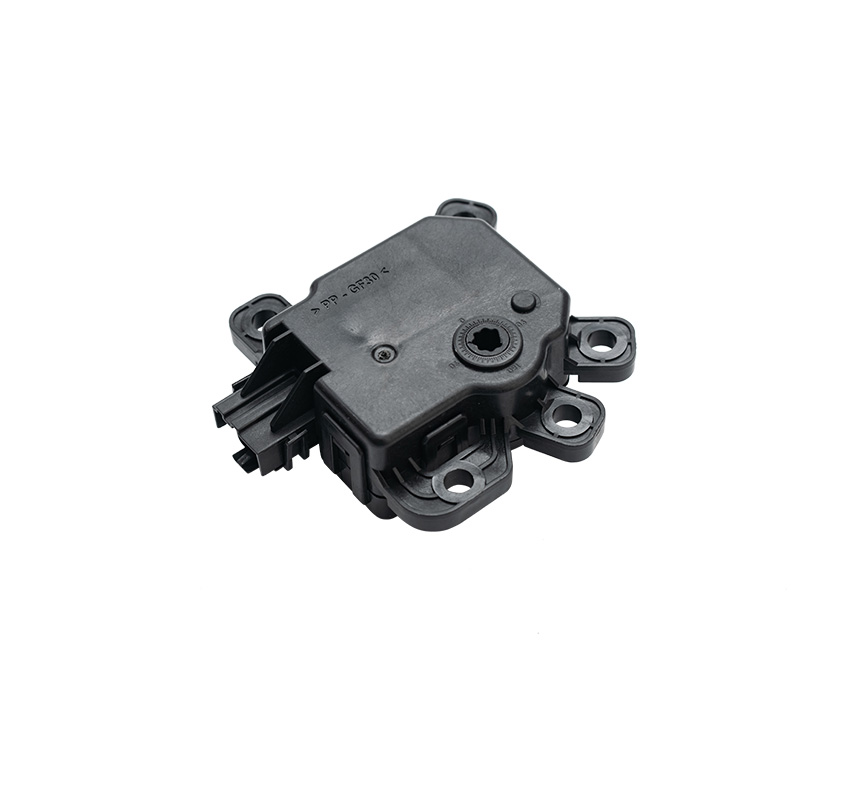
Although actuator construction varies according to the application, a typical pneumatic cylinder may contain several important components:
Cylinder barrel
Piston
Piston rod
End caps
Seals and O-rings
Guide elements
Bearings or bushings
Cushioning components
Mounting hardware
The cylinder barrel provides the main chamber in which the piston moves. The piston divides the internal chamber and transfers pneumatic pressure into mechanical force.
Seals are particularly important because compressed air must remain inside the working chamber. Piston seals, rod seals, and O-rings help reduce air leakage while allowing the internal components to move smoothly.
Many industrial cylinders also use adjustable cushioning. Cushioning reduces impact when the piston approaches the end of its stroke, helping reduce vibration, noise, and mechanical stress.
The manufacturing process depends on the actuator type, size, material, and required performance. However, producing a high-quality air actuator generally involves several stages.
Manufacturers first select materials according to pressure requirements, operating environment, corrosion resistance, weight, and service life. Aluminum alloys are commonly used for cylinder bodies because they provide a useful balance between strength and low weight. Stainless steel may be selected for corrosive or demanding environments.
For a pneumatic cylinder, the internal bore needs to have a smooth and accurately controlled surface. The barrel may undergo extrusion, cutting, boring, honing, or other precision machining processes.
Internal surface quality is important because the piston seal must move along the bore while maintaining an effective seal. Excessive roughness can increase friction and accelerate seal wear.
CNC machining is commonly used to manufacture components such as pistons, end caps, piston rods, mounting parts, and other precision components. Dimensional tolerances need to be controlled carefully because small deviations can affect alignment, leakage, friction, and overall actuator performance.
Some components require surface treatment to improve corrosion resistance, hardness, wear resistance, or appearance. Aluminum parts may receive anodizing, while steel or stainless-steel components may undergo polishing, plating, passivation, or other treatments depending on the design.
After machining and surface treatment, seals, O-rings, pistons, rods, bearings, and other components are assembled. Proper seal installation is essential because incorrectly positioned seals can cause leakage or excessive friction.
Finished actuators may be tested for air leakage, operating pressure, stroke length, output force, movement speed, cushioning performance, and dimensional accuracy.
For industrial applications, manufacturers may also perform repeated cycling tests to evaluate durability under simulated operating conditions.
Material selection has a direct influence on actuator performance.
Aluminum is widely used for cylinder barrels and end caps because it is lightweight, relatively corrosion resistant, and easy to machine. It is a practical choice for general industrial automation.
Stainless steel is often used when corrosion resistance is important. It can be suitable for food processing, chemical processing, pharmaceutical equipment, and other environments where moisture or aggressive substances may be present.
Carbon steel or alloy steel can be used for piston rods and other components that require higher mechanical strength. Surface treatment may be applied to improve wear and corrosion resistance.
Engineering plastics can also be used for guide rings, bushings, spacers, and certain actuator components. Materials such as POM and PA can provide low friction and good dimensional stability in suitable operating conditions.
Elastomers such as NBR, polyurethane, and FKM are commonly used for seals. The appropriate sealing material depends on temperature, pressure, chemical exposure, and the type of compressed air system.
One of the main advantages of an air actuator is its relatively simple construction. Compared with some electrically driven systems, pneumatic actuators can have fewer complex electronic components, which can simplify installation and maintenance.
Another advantage is fast response. Compressed air can produce rapid linear or rotary movement, making pneumatic systems useful for repetitive automation operations.
Air actuators can also provide a good power-to-size ratio. A compact cylinder can generate substantial mechanical force when supplied with an appropriate pressure.
Other advantages include:
Simple mechanical structure
Fast operating speed
Easy installation
Suitable for repetitive motion
Relatively low component cost
Good suitability for factory automation
No direct electrical motor required at the actuator
Pneumatic systems can also be useful in environments where electrical equipment may not be desirable for certain machine functions, although the complete system still needs to meet the applicable environmental and equipment requirements.
Despite their advantages, pneumatic actuators are not suitable for every application.
Compressed air is a compressible medium, so precise positioning can be more difficult than with some servo-driven electric systems. When highly accurate positioning is required, additional sensors, proportional valves, or closed-loop control may be necessary.
Energy efficiency is another consideration. Generating compressed air can consume significant energy, particularly when the pneumatic system has leakage or operates at unnecessarily high pressure.
Air leakage can also reduce system performance. Worn seals, damaged tubing, loose fittings, or poor connections may cause pressure loss.
Other potential limitations include:
Lower positioning precision in basic configurations
Compressed-air energy losses
Noise from exhaust air
Seal wear over time
Performance changes with pressure variations
Limited force compared with some hydraulic systems
For this reason, actuator selection should be based on the actual movement, force, speed, environment, and control requirements of the machine.
Air actuators are common in industrial automation because many manufacturing processes involve repetitive mechanical movement.
In assembly equipment, an actuator can push components into position, clamp workpieces, or move tooling.
In packaging machinery, pneumatic cylinders can control cutting mechanisms, sealing systems, product stops, sorting mechanisms, and material handling components.
In material handling, actuators can move, lift, push, or divert products along automated production lines.
In valve control, rotary pneumatic actuators are frequently used to open and close industrial valves. Their ability to produce controlled rotational movement makes them suitable for butterfly valves, ball valves, and other quarter-turn valve applications.
In robotics and automation equipment, compact pneumatic cylinders can perform gripping, clamping, indexing, and positioning operations.
Other applications include:
Automotive manufacturing
Food and beverage equipment
Pharmaceutical machinery
Injection molding equipment
Printing machinery
Textile machinery
Conveyor systems
Industrial process control
Pick-and-place systems
The operating environment should always be considered before choosing an actuator. Temperature, humidity, dust, chemicals, washdown conditions, load requirements, and cycle frequency can all influence the appropriate actuator design.
Choosing between an air actuator, electric actuator, and hydraulic actuator depends on the machine's requirements.
Pneumatic systems are often preferred for fast, repetitive movements where moderate positioning accuracy is acceptable. Electric actuators are generally more suitable when precise speed, position, and force control are important.
Hydraulic systems can provide very high force and are commonly used for heavy-duty applications. However, they require hydraulic fluid, pumps, valves, and additional system components.
An air actuator therefore occupies an important position between simple mechanical motion and more sophisticated motion-control systems. The best option depends on the required force, speed, accuracy, duty cycle, available utilities, and operating environment.
Before selecting an actuator, engineers should identify several key specifications.
Bore size affects the available output force. A larger piston area can generate greater force at the same air pressure.
Stroke length determines how far the actuator needs to move.
Operating pressure should match the pneumatic system and actuator specifications.
Actuation speed is important for machines with short cycle times.
Mounting configuration must match the available installation space and mechanical structure.
Seal material should be selected according to temperature and environmental conditions.
Cushioning may be necessary when the piston moves at high speed or when impact at the end of the stroke needs to be reduced.
For rotary applications, engineers should also consider torque, rotation angle, operating pressure, and valve compatibility.
An air actuator converts compressed air into mechanical motion, allowing industrial equipment to perform pushing, pulling, clamping, lifting, rotating, and positioning operations. Its basic working principle relies on air pressure acting on an internal piston, diaphragm, vane, or similar mechanism.
The performance of an actuator depends not only on its basic design but also on manufacturing accuracy, material selection, sealing technology, surface treatment, and quality control. Aluminum, stainless steel, engineering plastics, and different elastomer compounds are commonly selected according to the intended application.
While pneumatic actuation offers fast movement, simple construction, and practical automation capabilities, it also has limitations related to compressed-air efficiency, leakage, positioning accuracy, and noise.
Understanding these factors makes it easier to determine whether an air actuator is appropriate for a particular machine and how its specifications should be configured. For automated production equipment, the right actuator can provide reliable repetitive motion while integrating efficiently with valves, sensors, pneumatic controls, and other automation components.
Related keywords: air actuator, pneumatic actuator, pneumatic cylinder, pneumatic cylinder manufacturer, rotary actuator

Mr. Hansol Kim