


Please Leave Us A Message
Haoyong Automotive Controls
When searching for an actuator, you may come across several different terms, including drive, final control element, motion device, or actuating mechanism. So, what is another name for actuator? The answer depends on the industry and the type of motion involved. In automation and industrial control, an actuator is generally a device that converts energy into controlled mechanical movement. It receives an input signal or energy source and produces a physical action such as linear movement, rotation, lifting, pushing, pulling, opening, or closing.
Actuators are widely used in industrial machinery, robotics, automotive systems, medical equipment, aerospace equipment, valves, production lines, and automated systems. Although the terminology may vary, the basic purpose remains the same: converting electrical, pneumatic, hydraulic, or other forms of energy into useful mechanical motion.
One of the most common alternative terms for an actuator is a drive. However, these terms are not always completely interchangeable. In industrial automation, “drive” can refer to a system that controls the speed, torque, or position of a motor, while an actuator is the component that physically creates the required movement.
In process control, an actuator may also be called a final control element. For example, a control valve actuator receives a signal from a control system and moves the valve to regulate the flow of liquid or gas. Other related terms include actuating device, motion actuator, actuation mechanism, and electromechanical actuator.
The exact terminology usually depends on the application. For example, a device designed to produce straight-line movement is commonly called a linear actuator, while a device designed to generate rotational movement is known as a rotary actuator.
The working principle of an actuator is based on energy conversion. The actuator receives energy from a power source and transforms that energy into mechanical motion. A control signal determines when the actuator operates, how far it moves, how fast it moves, or how much force or torque it produces.
The basic operating process can be divided into four stages:
Input: The actuator receives energy and, in many systems, a control signal from a controller, PLC, sensor, or automation system.
Energy conversion: An internal mechanism converts the supplied energy into mechanical force or torque.
Motion generation: The actuator produces linear or rotary movement.
Mechanical output: The generated movement drives another component, such as a valve, machine arm, lifting mechanism, damper, or positioning system.
For example, an electric actuator may use an electric motor to create rotational motion. A lead screw, ball screw, or gear mechanism can then convert this rotation into linear movement. In contrast, a pneumatic actuator uses compressed air to move a piston inside a cylinder.
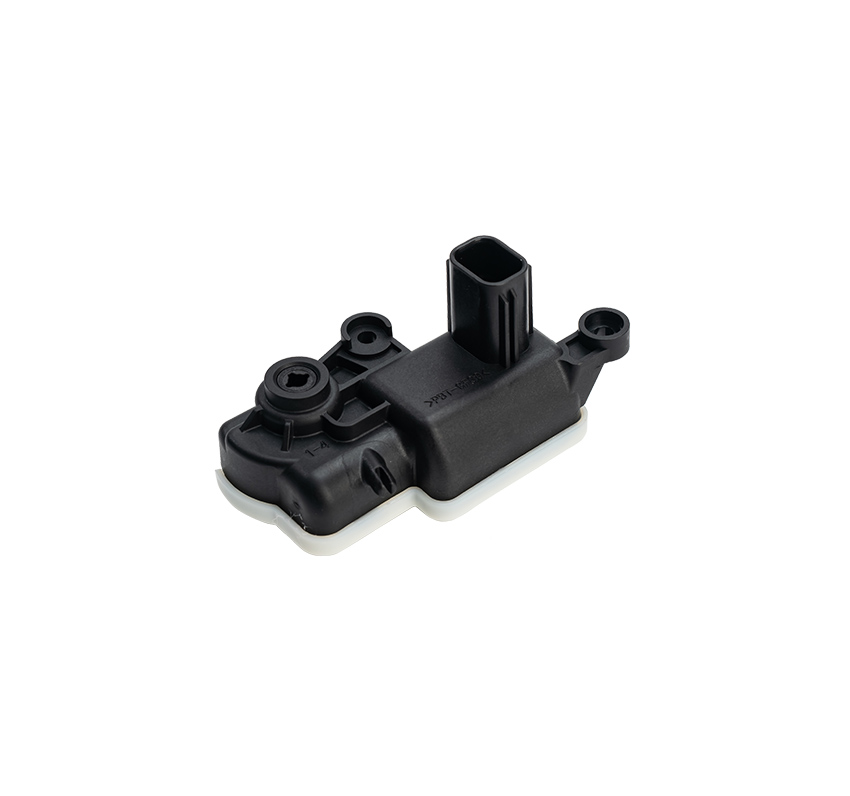
A linear actuator produces movement along a straight path. It is commonly used when equipment needs to push, pull, lift, position, or adjust a component. Electric linear actuators often combine a motor, gearbox, screw assembly, housing, and actuator rod.
Depending on the design, linear actuators may use lead screws, ball screws, rack-and-pinion mechanisms, or other transmission systems. They are popular because they can provide precise positioning and controlled movement without requiring complex mechanical linkages.
A rotary actuator generates rotational movement around an axis. It can be driven by electricity, compressed air, or hydraulic pressure. Rotary actuators are commonly used for valve operation, robotic joints, indexing mechanisms, and automated machinery.
The output of a rotary actuator is usually specified by torque, rotation angle, speed, and load capacity. Some models provide continuous rotation, while others are designed for a limited angular range.
An electric actuator uses electrical energy to produce mechanical movement. Depending on the application, it may use an AC motor, DC motor, servo motor, or stepper motor. Electronic control systems can regulate its speed, position, acceleration, and direction.
Electric actuators are widely used in factory automation because they offer precise control and can easily communicate with modern control systems. They are particularly suitable for applications requiring repeatable positioning and programmable movement.
A pneumatic actuator uses compressed air to generate mechanical motion. A typical pneumatic cylinder contains a piston, cylinder tube, seals, piston rod, and end caps. When compressed air enters one side of the cylinder, pressure acts on the piston and creates linear movement.
Pneumatic systems are valued for their fast response, relatively simple construction, and suitability for repetitive industrial operations. They are commonly found in assembly machines, packaging equipment, material handling systems, and automated production lines.
The materials used to manufacture an actuator depend on the required load, operating environment, speed, temperature, corrosion resistance, and service life.
Aluminum is frequently used for housings and structural components because it is lightweight and provides good corrosion resistance. It is suitable for equipment where reducing overall weight is important.
carbon steel and stainless steel are commonly used for shafts, rods, brackets, gears, and other load-bearing components. Stainless steel is particularly useful in environments exposed to moisture, chemicals, or frequent cleaning.
Engineering plastics such as nylon, POM, and other high-performance polymers may be used for gears, bushings, guides, and insulating components. These materials can reduce friction, weight, and manufacturing costs.
Actuators also rely heavily on specialized sealing materials. Rubber compounds and elastomers are commonly used for O-rings, piston seals, and shaft seals to prevent air, fluid, dust, or contaminants from entering the mechanism.
Actuator manufacturing normally involves multiple precision manufacturing and assembly processes. The process begins with engineering design based on required force, torque, stroke length, speed, duty cycle, environmental conditions, and installation dimensions.
Metal components such as shafts, rods, gears, and housings may be produced through CNC machining, turning, milling, drilling, grinding, die casting, or extrusion. Components requiring high dimensional accuracy may receive additional finishing or surface treatment.
For an electric actuator, the motor and transmission system are assembled with components such as gears, bearings, screws, couplings, and position sensors. For pneumatic designs, the cylinder body, piston, seals, piston rod, and end caps must be accurately assembled to maintain proper air pressure and movement.
After assembly, manufacturers typically perform inspections and functional testing. Depending on the product, tests may include dimensional inspection, load testing, stroke testing, speed testing, leakage testing, noise testing, endurance testing, and electrical performance testing.
Actuators provide several important advantages in automated equipment. They allow machines to perform controlled movement consistently and reduce the need for manual operation. They can also improve repeatability, productivity, positioning accuracy, and system integration.
Electric designs offer precise control and are easy to integrate with PLCs, sensors, servo controllers, and other electronic systems. Pneumatic designs can provide fast movement and relatively simple operation. Hydraulic systems can generate very high forces for heavy-duty applications.
However, every actuator technology has limitations. Electric actuators may require more complex electronic controls and can generate heat during continuous operation. Pneumatic actuators require a compressed-air system, including an air compressor and associated components. Hydraulic actuators can provide high force but require hydraulic fluid, pumps, hoses, and maintenance.
Another important consideration is the operating environment. Dust, moisture, vibration, extreme temperatures, corrosive chemicals, and excessive loads can affect actuator performance and service life. Selecting the correct actuator therefore requires consideration of both mechanical requirements and environmental conditions.
Actuators are fundamental components in modern automation. In manufacturing, they control machine movements, conveyors, clamps, positioning mechanisms, robotic systems, and assembly equipment. In packaging machinery, actuators can move, sort, seal, cut, and position products.
In the automotive industry, actuators are used for seat adjustment, door locking, HVAC control, throttle systems, braking systems, and other vehicle functions. In robotics, actuators provide the movement required for robotic joints, grippers, arms, and positioning systems.
They are also used in medical equipment, agricultural machinery, aerospace systems, automated valves, smart furniture, adjustable beds, lifting equipment, and building automation.
For example, a linear actuator can adjust the height of a medical bed, while a rotary actuator can open and close an industrial valve. The actuator type is selected according to the required movement, force, speed, accuracy, and operating environment.
Choosing an actuator should begin with the required motion and load. Key specifications include force, torque, stroke length, travel speed, operating voltage, duty cycle, positioning accuracy, mounting configuration, and environmental conditions.
For straight-line movement, a linear design is usually appropriate. For angular or rotational movement, a rotary design may be more suitable. When precise programmable positioning is required, an electric actuator with feedback control may be preferred. For fast repetitive movement in a factory environment, pneumatic technology can be an effective option.
It is also important to consider the actuator's duty cycle. An actuator designed for intermittent operation may not be suitable for continuous industrial use. Selecting a product with an appropriate load rating and service life can help reduce premature wear and maintenance requirements.
So, what is another name for actuator? Depending on the industry and application, an actuator may be referred to as a drive, actuating device, motion device, actuating mechanism, or final control element. However, these terms can have slightly different meanings, so the specific application should always be considered.
At its core, an actuator converts an energy source into controlled mechanical movement. Whether it is an electric, pneumatic, hydraulic, linear, or rotary design, the actuator plays an important role in automation and motion control. Understanding its working principle, materials, manufacturing process, advantages, limitations, and applications makes it easier to select the right solution for a particular machine or industrial system.

Mr. Hansol Kim