


Please Leave Us A Message

Haoyong Automotive Controls
Yes, an AC actuator can control valve position by converting electrical energy into mechanical movement. Depending on its design, an AC actuator can open or close a valve, move it to an intermediate position, or maintain a specified opening to regulate fluid flow. An AC electric actuator is commonly used in industrial automation, HVAC systems, water treatment, and process control applications where reliable valve positioning is required.
The ability to control valve position depends on the actuator type, motor design, control signal, feedback mechanism, and valve requirements. Understanding how an AC motor actuator works helps engineers select a suitable solution for accurate and stable valve operation.
An AC Actuator controls valve position by using an alternating-current-powered motor to generate mechanical movement. The motor drives a gearbox or transmission mechanism, which transfers torque to the valve stem or shaft. This movement changes the valve opening and controls the flow of liquids, gases, or other process media.
The operating sequence typically includes the following steps:
Control signal input: A controller sends a command indicating the required valve position or operating direction.
Motor activation: The AC motor receives power and begins rotating in the required direction.
Mechanical transmission: Gears and drive components convert motor rotation into the torque needed to operate the valve.
Position adjustment: The valve moves toward the commanded opening or closing position.
Position monitoring: Limit switches, position sensors, or feedback devices identify the valve position when these features are included.
Basic motorized actuators may provide only open and closed positions. More advanced electromechanical actuators can support modulating control, allowing the valve to stop at different positions between fully open and fully closed.
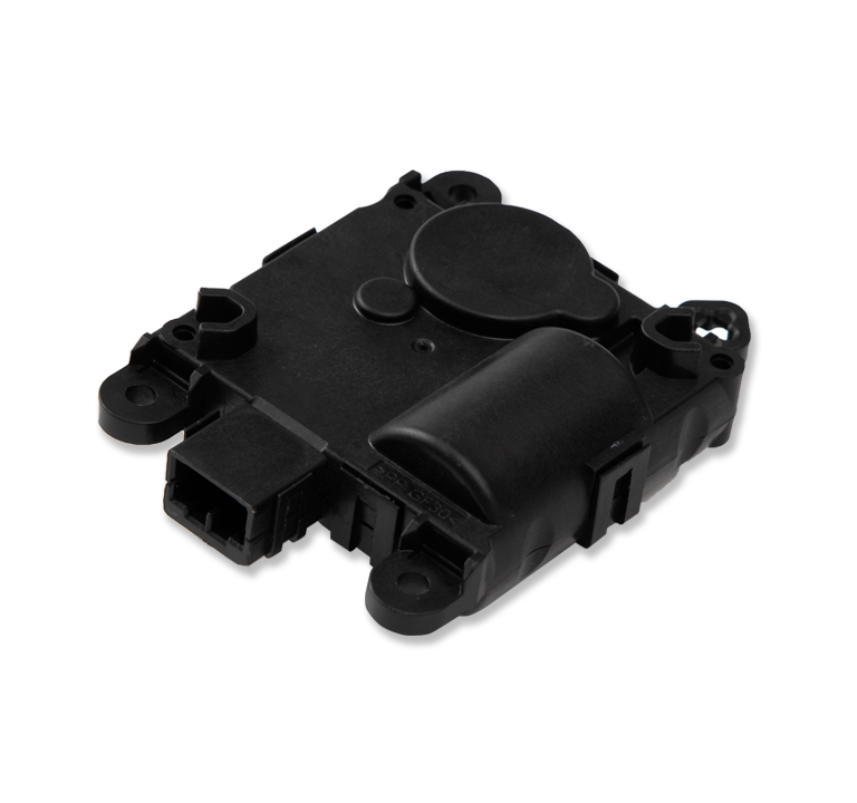
Not every AC powered actuator offers the same positioning capability. The appropriate control method depends on whether the application requires simple switching or continuous adjustment.
On-off control is the simplest operating mode. The AC actuator moves the valve to a fully open or fully closed position in response to a control command. Limit switches can stop the motor when the valve reaches its end position.
This arrangement is suitable for applications such as water supply isolation, basic process switching, and equipment shutdown systems. It is generally not designed to maintain arbitrary intermediate valve positions.
Modulating control allows the valve to move to different positions according to the required operating conditions. Depending on the actuator and controller, the command may use a proportional analog signal, a digital communication interface, or another supported control method.
For example, a controller may command a valve to remain partially open to regulate water flow or process pressure. The actuator adjusts the valve position in response to the command. Closed-loop systems can compare the target position with actual position feedback and correct the difference.
Position feedback helps a control system determine whether a valve has reached the requested position. Depending on the design, an AC electric actuator may use potentiometers, encoders, position transmitters, or auxiliary switches.
Feedback is especially useful when a process requires repeatable positioning or when operators need to monitor valve status remotely. However, feedback accuracy depends on sensor resolution, mechanical backlash, calibration, and the overall control system.
Several factors determine whether an AC actuator can position a valve accurately and consistently.
Actuator type: On-off actuators and modulating actuators have different positioning capabilities.
Control resolution: The controller and actuator must support sufficiently fine adjustments for the application.
Valve torque requirements: The actuator must provide enough torque to overcome friction, pressure-related forces, and other operating loads.
Mechanical backlash: Clearance in gears and couplings can affect repeatability, particularly when the direction of movement changes.
Position feedback: Suitable sensors help verify actual valve position and support corrective control.
Operating conditions: Temperature, vibration, contamination, and process pressure may influence performance.
Electrical supply: The actuator must receive the correct voltage and frequency specified by its manufacturer.
Choosing an actuator with adequate torque and suitable control resolution is essential. An actuator that is too small may fail to move the valve reliably, while an unsuitable control arrangement may prevent accurate intermediate positioning even when sufficient torque is available.
Yes, an AC actuator can work with a programmable logic controller (PLC) when the actuator's electrical interface and control requirements are compatible with the PLC system.
For basic on-off operation, a PLC output may operate an appropriate motor control circuit or actuator control input. Electrical interlocks and suitable protection devices help prevent unsafe switching or unintended operation.
For modulating control, the PLC may send a supported analog signal or digital command to a compatible actuator controller. The actuator can then adjust valve position according to the programmed process requirements. If position feedback is available, the PLC can monitor actual valve position and identify discrepancies between the command and the measured result.
Before connecting an AC motor actuator to a PLC, engineers should verify the rated voltage, current requirements, input and output signal types, wiring configuration, and any necessary motor contactors or control relays. Directly connecting a motor to a low-power PLC output is generally inappropriate unless the output is specifically rated for that load.
A manual valve operator requires a person to turn a handwheel, lever, or similar mechanism. An AC actuator uses electrical power to move the valve automatically.
The main advantage of an electric actuator is that it can receive commands from remote control systems and operate according to programmed conditions. This makes it suitable for automated production lines, centralized building management, and industrial process control.
A manual operator may be adequate for infrequently adjusted valves, particularly where electrical power is unavailable. An AC powered actuator is more appropriate when remote operation, repeatable movement, or integration with an automated control system is required.
Selecting the right AC actuator requires matching its mechanical and electrical characteristics to the valve and the application.
Valve type: Identify whether the valve is a ball valve, butterfly valve, globe valve, or another design.
Required torque: Determine the valve's operating torque under the most demanding expected conditions and apply an appropriate engineering margin.
Positioning mode: Decide whether the application requires on-off operation, intermediate positioning, or continuous modulation.
Power supply: Confirm the required AC voltage, frequency, and electrical ratings.
Control interface: Check compatibility with PLCs, building automation systems, or other controllers.
Feedback requirements: Determine whether limit switches, analog position feedback, or digital communication are necessary.
Environmental protection: Consider ambient temperature, moisture, dust, vibration, and hazardous-area requirements where applicable.
Engineers should also check the valve connection, mounting dimensions, required operating speed, duty rating, and manual override options. The actuator and valve must be mechanically compatible and correctly configured for the intended service.
If an AC actuator does not move a valve to the expected position, the problem may originate in the power supply, control circuit, mechanical assembly, or feedback system.
The valve does not move: Check the power supply, control command, motor protection devices, and mechanical obstruction.
The valve stops too early: Inspect limit switch settings, position calibration, and mechanical travel restrictions.
The valve cannot maintain an intermediate position: Confirm that the actuator supports modulating control rather than only on-off operation.
The position reading is incorrect: Check the feedback sensor, wiring, calibration, and controller configuration.
The actuator struggles under load: Verify valve torque requirements, coupling alignment, and signs of excessive friction.
Electrical inspection and maintenance should be performed by qualified personnel, following the manufacturer's instructions and appropriate isolation procedures.
An AC actuator can control valve position effectively when its operating mode, motor capacity, control interface, and feedback features match the application. Basic actuators are suitable for open-close operation, while compatible modulating models can support intermediate positioning and more precise flow regulation.
For reliable performance, evaluate valve torque, control requirements, power supply, feedback accuracy, and environmental conditions before selecting an AC electric actuator. Proper sizing, installation, and commissioning help ensure dependable valve operation in industrial automation, HVAC, and process control systems.
```

Mr. Hansol Kim