


Please Leave Us A Message

Haoyong Automotive Controls
An AC actuator controls air dampers by converting alternating-current electrical energy into mechanical movement that opens, closes, or adjusts the damper blades. In heating, ventilation, and air conditioning (HVAC) systems, this movement regulates airflow through ducts, air handling units, ventilation openings, and other air distribution components.
An AC electric actuator can operate in response to a thermostat, building management system, ventilation controller, or other control device. Depending on its design, the actuator may provide simple open-close control or modulate the damper position to maintain a desired airflow, temperature, or pressure condition.
The effectiveness of an AC motor actuator depends on its torque, operating voltage, control method, mechanical connection, and compatibility with the damper assembly. Understanding these factors helps engineers design reliable air distribution and ventilation systems.
An AC Actuator is an electrically powered device that produces movement to operate a mechanical component. When installed on an HVAC damper, it turns or moves the damper shaft, which changes the angle of the blades and controls the amount of air passing through the duct.
A typical damper assembly includes several components:
Actuator motor: Converts electrical energy into rotational or mechanical movement.
Gear mechanism: Reduces motor speed and increases the torque available to move the damper.
Drive coupling: Connects the actuator output to the damper shaft.
Damper blades: Change position to regulate or stop airflow.
Control interface: Receives commands from a thermostat, HVAC controller, or building automation system.
Position feedback or end switches: Where provided, indicate the damper position or confirm that a travel limit has been reached.
Not every motorized actuator includes all these features. The configuration depends on whether the application requires basic switching, adjustable positioning, or additional monitoring.
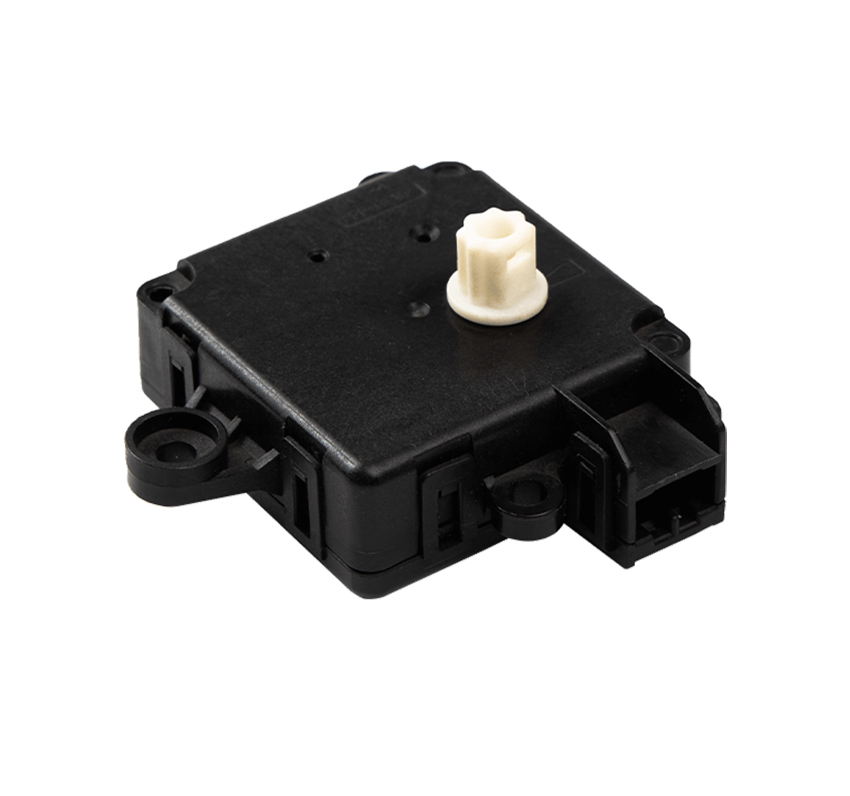
The operating process begins when the HVAC control system determines that the damper needs to change position. A controller sends a compatible command to the AC powered actuator, and the actuator motor generates movement.
The gearbox and output shaft transfer this movement to the damper shaft. As the shaft rotates, the damper blades change angle, allowing more or less air to pass through the duct.
The main operating steps are:
Demand detection: A thermostat, sensor, or HVAC controller identifies a need to adjust airflow.
Control command: The control system sends an appropriate electrical signal or switching command.
Motor operation: The AC motor drives the actuator mechanism in the required direction.
Damper movement: The output shaft rotates the damper blades toward the target position.
Travel control: The actuator stops at its end position or adjusts to a commanded intermediate position, depending on its design.
Position verification: If feedback is available, the controller can check the actual position and determine whether further adjustment is required.
For example, when a ventilation system needs more outdoor air, the controller may command the damper to open further. When less airflow is required, the actuator moves the blades toward a more closed position. The exact sequence depends on the system design and control strategy.
An on-off AC actuator moves a damper between two defined positions, usually fully open and fully closed. This control method is relatively simple and is often used for isolation dampers, basic ventilation switching, and applications where intermediate positioning is unnecessary.
End switches or internal travel controls can stop the actuator when it reaches its designated endpoint. However, an on-off actuator should not be assumed to support accurate intermediate positioning.
Floating control uses separate commands to drive the actuator in opposite directions, commonly open and close. By controlling how long the actuator runs, the HVAC controller can adjust the damper toward a desired position.
This approach can provide intermediate damper settings without requiring a continuously variable analog command. However, positioning accuracy depends on actuator response, travel time, control logic, and whether position feedback is available.
A modulating electromechanical actuator supports proportional adjustment of damper position. Depending on the model, it may accept an analog control signal or a digital command from an HVAC controller.
For example, a compatible actuator may receive a 0–10 V control signal representing the requested position. The relationship between signal level and damper opening must follow the manufacturer's configuration. Some systems also use position feedback to verify the actual position and improve control.
Modulating control is useful for variable-air-volume systems, airflow balancing, and applications where the ventilation rate changes according to occupancy, temperature, or indoor air quality.
An AC actuator regulates airflow by adjusting the effective opening of the damper. When the blades open further, the duct generally permits more airflow; when they close, airflow is restricted. The actual airflow also depends on duct pressure, fan performance, system resistance, and damper characteristics.
In a temperature-controlled room, a thermostat may signal that more conditioned air is needed. The HVAC controller can then adjust a compatible damper actuator to increase airflow to that zone. When the temperature approaches the setpoint, the controller may reduce the damper opening.
In ventilation systems, dampers may control outdoor air intake, exhaust air, or air distribution between different zones. A motorized actuator allows these adjustments to occur automatically rather than requiring manual operation.
It is important to distinguish damper position from measured airflow. A damper opening percentage does not necessarily correspond to the same percentage of airflow because pressure differences and duct conditions affect the relationship. Applications requiring accurate airflow control may need airflow sensors and a suitable closed-loop control strategy.
Yes, an AC actuator can be integrated with a building management system (BMS) when its control interface is compatible with the system architecture.
A basic actuator may be controlled through relay outputs or other suitable switching circuits. A modulating model may accept an analog command, while more advanced models may support digital communication through a compatible protocol.
Through a BMS, operators can coordinate damper positions with heating, cooling, ventilation schedules, occupancy signals, and other building functions. Where position feedback or status contacts are available, the system may also monitor actuator operation and identify certain faults.
Before integration, verify the actuator's supply voltage, control signal, wiring arrangement, input impedance where relevant, output requirements, and communication protocol. An actuator's AC power supply and its control signal are separate specifications; a unit powered by AC does not necessarily use an AC control signal.
Selecting a suitable actuator requires evaluating the mechanical requirements of the damper and the electrical requirements of the HVAC control system.
Damper torque: The actuator must generate sufficient torque to overcome blade friction, air pressure forces, seals, and linkage resistance.
Damper size and design: Blade arrangement, shaft dimensions, and damper construction influence the required actuator capacity.
Control type: Determine whether on-off, floating, or modulating operation is required.
Power supply: Match the actuator's rated AC voltage and frequency to the available supply.
Operating time: Check how quickly the actuator must move the damper between positions.
Position feedback: Decide whether the system needs actual position monitoring, end switches, or status indication.
Environmental conditions: Consider temperature, humidity, dust, vibration, and installation location.
Fail-safe requirements: Determine whether the damper must move to a predefined position following a power failure. Spring-return or other fail-safe models may be required.
For smoke control, fire protection, or other life-safety applications, the actuator and damper assembly must be specifically approved and configured for the intended function and applicable codes. A general-purpose AC powered actuator should not automatically be considered suitable for these applications.
Several electrical and mechanical issues can prevent an AC actuator from moving an air damper correctly.
No movement: Check the supply voltage, control command, wiring, protective devices, and mechanical obstruction.
Slow movement: Check whether the actuator is correctly sized and whether the damper shaft or linkage has excessive friction.
Incorrect damper position: Verify the control signal, actuator configuration, mechanical coupling, and travel limits.
Unstable positioning: Check controller settings, feedback signals, mechanical backlash, and whether the actuator supports the intended control method.
Excessive noise or overheating: Inspect for overloading, binding, incorrect installation, or electrical problems in accordance with the manufacturer's guidance.
Routine maintenance should include checking mounting hardware, shaft connections, blade movement, wiring condition, and actuator operation. Any electrical inspection should be carried out by qualified personnel using appropriate power-isolation procedures.
An AC actuator controls air dampers by using an electrically powered motor and mechanical drive to adjust damper blade position. Depending on its control capabilities, it can provide simple open-close operation, floating control, or modulating adjustment for more flexible airflow management.
AC electric actuators are useful in HVAC ventilation, air distribution, and building automation systems because they enable remote operation and automatic adjustment. To achieve reliable performance, select an actuator with suitable torque, operating speed, control compatibility, and environmental protection.
For demanding applications, consider whether position feedback, fail-safe operation, or integration with airflow sensors is necessary. Correct actuator selection, installation, and commissioning help ensure that the damper operates as intended throughout the HVAC system's service life.
```

Mr. Hansol Kim