


Please Leave Us A Message

Haoyong Automotive Controls
An Auto Headlamp is a critical component of automotive lighting that illuminates the road ahead and helps drivers identify obstacles, road markings, pedestrians, and other vehicles in low-light conditions. Modern automotive headlamps integrate optical components, electronic systems, structural housings, and protective materials to deliver reliable illumination under changing environmental and operating conditions. For automotive manufacturers, importers, and B2B purchasing teams, understanding how an Auto Headlamp is designed, manufactured, and tested is essential for evaluating product quality and supplier capabilities.
Unlike conventional lighting products, a car headlamp must meet demanding requirements for optical accuracy, environmental resistance, mechanical durability, and long-term operational stability. Its performance depends not only on the light source but also on lens quality, reflector geometry, housing precision, sealing integrity, and assembly consistency. This article explains how an automotive headlamp works, examines its major manufacturing processes, and identifies the critical quality control points that buyers should assess when sourcing automotive headlight assemblies.
An Auto Headlamp is a front-mounted lighting unit designed to provide visibility for the driver and make the vehicle more visible to other road users. Depending on the vehicle platform and configuration, an automotive headlamp may use halogen bulbs, high-intensity discharge (HID) technology, or light-emitting diodes (LEDs). Some advanced systems also incorporate adaptive lighting, automatic high-beam control, or electronically controlled beam distribution.
The basic operating principle involves generating light and directing it onto the road through an engineered optical system. A reflector, projector lens, or combination of optical elements controls the direction and distribution of the emitted light. The housing supports these components, while the outer lens protects the assembly from moisture, dust, stone impacts, and other external influences.
A complete automotive headlight assembly typically includes an outer lens, housing, reflector or projector module, light source, mounting brackets, electrical connectors, and sealing components. Depending on the design, it may also contain a driver module, heat sink, ventilation structure, adjustment mechanism, or electronic control unit.
For B2B buyers, it is important to distinguish between an individual lighting component and a complete vehicle headlamp assembly. A component supplier may specialize in lenses, reflectors, or housings, whereas a complete assembly manufacturer must coordinate optical engineering, mechanical design, electronics, sealing, and final validation.
Each component contributes to the overall performance and service life of a vehicle headlamp. Understanding these relationships helps buyers evaluate whether a supplier can deliver consistent products rather than simply assemble compatible parts.
Outer lens: The lens transmits and distributes light while protecting the internal components. Polycarbonate is widely used because of its impact resistance and design flexibility. Optical clarity, surface quality, dimensional accuracy, and resistance to ultraviolet radiation all influence long-term performance. Poor material selection or inadequate surface protection can cause yellowing, haze, or reduced light transmission.
Reflector and projector optics: These components establish the beam pattern and help control light intensity and direction. Their geometry, surface finish, coating uniformity, and positional accuracy affect illumination performance. Small deviations in a critical optical surface can create glare, dark zones, or insufficient road coverage.
Housing and mounting structure: The housing maintains component alignment and protects internal systems. It must withstand temperature changes, vibration, and mechanical loads without warping or cracking. Mounting accuracy is especially important because even a correctly manufactured optical module may perform poorly if it is installed at the wrong angle.
Light source and thermal management: LEDs require suitable electrical control and heat dissipation. Excessive operating temperatures can accelerate lumen depreciation, damage electronic components, and shorten service life. The thermal design must therefore match the light source, housing layout, and expected operating conditions.
Sealing and ventilation: Gaskets, welded joints, bonded lenses, and pressure-equalization vents help manage moisture and temperature fluctuations. An inadequate sealing design may cause water ingress, internal condensation, corrosion, or electrical failure.
The manufacturing process combines precision molding, optical surface treatment, mechanical assembly, sealing, and functional testing. The exact sequence varies by product design and light source, but the following stages represent common operations in automotive headlamp production.
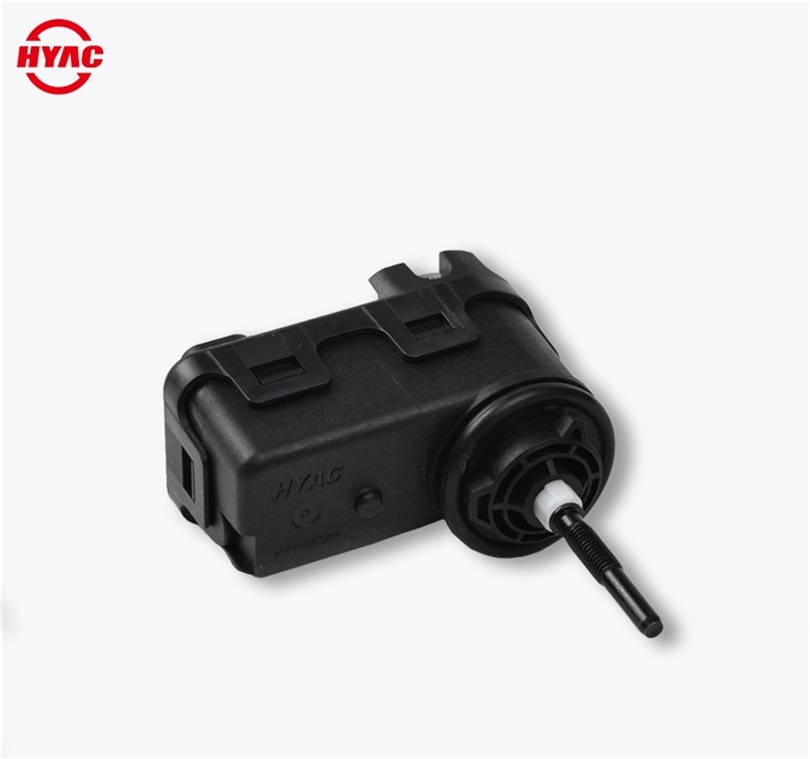
Production begins with engineering specifications covering beam distribution, package dimensions, mounting points, thermal requirements, environmental exposure, and applicable vehicle regulations. Engineers select materials according to their optical, mechanical, thermal, and chemical properties.
Polycarbonate is commonly selected for outer lenses because it offers impact resistance and supports complex geometries. Automotive-grade engineering plastics may be used for housings and internal supports, while reflectors often require materials that can maintain dimensional stability during molding and withstand subsequent coating processes.
Material selection affects every downstream operation. Resin moisture, contamination, inconsistent material batches, and unsuitable additives can lead to bubbles, discoloration, dimensional changes, or reduced durability. Before production, suppliers should verify material specifications, incoming inspection results, and batch traceability. Mold-flow simulation and thermal analysis can also help identify potential deformation, uneven wall thickness, and assembly interference before tooling is finalized.
Injection molding converts engineered plastic materials into the precise shapes required for the outer lens, housing, reflector substrate, and internal brackets. For optical lenses, the mold surface must reproduce the intended geometry while maintaining high transparency and minimal surface defects.
Important process parameters include melt temperature, mold temperature, injection speed, holding pressure, cooling time, and material drying conditions. Poor parameter control can produce sink marks, warpage, flow lines, residual stress, or incomplete filling. In transparent optical components, even defects that appear minor under ordinary lighting may affect optical transmission or become visible after coating.
Dimensional consistency is equally important. Warped housings can shift mounting points, while variations in lens geometry can complicate sealing and optical alignment. Manufacturers should use first-article inspection, dimensional measurement, and statistical process monitoring to verify critical dimensions. Optical lenses may also require visual inspection under controlled lighting and checks for haze, scratches, inclusions, and surface irregularities.
Reflectors need a highly reflective surface to direct light efficiently. Depending on the design, manufacturers may use vacuum metallization to deposit a thin reflective layer, often aluminum, onto a prepared substrate. A protective topcoat may then be applied to improve resistance to oxidation, handling damage, or environmental exposure.
Before metallization, the substrate must be clean, dry, and sufficiently smooth. Dust, oil, moisture, and mold-release residue can cause pinholes, poor adhesion, uneven reflectivity, or visible coating defects. Incorrect deposition conditions may create nonuniform coating thickness, while inadequate curing can reduce coating stability.
Quality control should evaluate surface cleanliness, coating appearance, adhesion, and reflectance where required by the product specification. The inspection method and acceptance limits should be defined for the particular coating system. More importantly, the coated reflector must be evaluated as part of the optical assembly because acceptable surface appearance alone does not guarantee a correct beam pattern.
During this stage, the light source, wiring harness, connectors, driver electronics, and thermal management components are installed. LED-based automotive headlamps require particular attention to current control, heat transfer, electrical insulation, and compatibility between the LED module and the optical system.
Incorrect connector installation, damaged wiring, unstable electrical contacts, or insufficient heat-sink contact can cause flickering, intermittent operation, excessive temperatures, or premature failure. Excessive assembly force may also damage circuit boards or compromise the positioning of optical components.
Manufacturers should verify connector retention, wiring routing, electrical continuity, polarity, current consumption, and basic lighting functionality. For LED systems, thermal checks and operation at specified electrical conditions help identify problems that may not appear during a brief visual inspection. Where electronic controls are integrated, additional diagnostic and communication checks may be necessary.
Once the major components are prepared, the reflector or projector, light source, housing, and lens are brought together. This stage determines whether the manufactured parts function as a coordinated optical system. The relative positions of the light source, reflector, projector lens, and mounting references must remain within the design tolerances.
Small alignment errors can shift the cutoff line, change the beam distribution, increase glare, or reduce illumination in important road areas. Assembly fixtures, locating features, controlled fastening, and calibrated adjustment equipment help maintain repeatability. Operators must also prevent dust, fingerprints, and foreign particles from entering the optical chamber.
Before the assembly is permanently closed, manufacturers should inspect internal cleanliness, component seating, wire clearance, and the integrity of mechanical connections. A controlled assembly environment and documented work instructions reduce variation between production batches.
The outer lens is commonly attached to the housing using an appropriate adhesive, sealant, or bonding process. The joint must accommodate thermal expansion while maintaining resistance to water, dust, vibration, and environmental aging. Depending on the design, ventilation features may allow pressure equalization without permitting harmful moisture ingress.
Bonding quality depends on surface preparation, adhesive compatibility, bead geometry, application consistency, curing conditions, and component positioning. Insufficient sealant, interrupted adhesive beads, contamination, or incomplete curing can create leakage paths. Excessive or misplaced adhesive may interfere with vents or visible surfaces.
Leak testing should follow a validated method appropriate to the assembly, such as controlled pressure-decay testing or another specified sealing test. Environmental validation may include humidity exposure, thermal cycling, and water-ingress testing according to the applicable requirements. Internal condensation should be assessed against the product's design and test criteria rather than judged solely by appearance immediately after exposure.
Final inspection confirms that the completed automotive headlight assembly meets the defined mechanical, optical, and electrical requirements. Photometric testing is particularly important because a lamp can appear bright while still producing an incorrect or unsafe beam pattern.
Depending on the product and market, testing may include luminous intensity at specified points, beam cutoff position, light distribution, color characteristics, aiming accuracy, and electrical performance. Equipment must be calibrated, and the test setup must reproduce the required measurement conditions. Applicable requirements vary by jurisdiction, lamp function, vehicle category, and certification pathway.
Additional inspections may cover overall dimensions, mounting interfaces, connector fit, cosmetic defects, labeling, and traceability. For selected products, durability validation can include vibration, mechanical shock, thermal cycling, humidity, ultraviolet exposure, and corrosion-related testing of relevant components. These tests help identify failure mechanisms that may not be detected during routine end-of-line inspection.
Understanding typical defects helps purchasing teams ask more precise questions during supplier evaluation and corrective-action reviews.
Yellowing or reduced lens clarity: This may result from unsuitable resin, insufficient UV protection, surface-coating degradation, or prolonged environmental exposure. Material verification and accelerated weathering tests can help assess resistance to aging.
Water ingress and condensation: Common causes include discontinuous sealant, poor bonding, damaged gaskets, or unsuitable vent design. Seal-process monitoring and validated leak testing are essential preventive controls.
Incorrect beam pattern or excessive glare: These issues can arise from optical design errors, reflector surface defects, inconsistent light-source positioning, or assembly misalignment. Photometric testing is the most direct method for confirming beam performance.
LED overheating or intermittent operation: Potential causes include inadequate heat dissipation, unstable electrical connections, driver defects, or incorrect operating current. Electrical checks should be combined with thermal evaluation and, where appropriate, extended operating tests.
Cracking, warpage, or loose mounting points: These problems may originate from molding stress, unsuitable materials, poor dimensional control, or excessive assembly loads. Process capability studies and mechanical validation can reduce recurrence.
When sourcing an auto headlamp or complete automotive headlight assembly, buyers should evaluate more than unit price and production capacity. A reliable supplier should be able to explain its material controls, molding capabilities, optical coating processes, assembly procedures, and inspection methods.
Ask whether the supplier maintains documented inspection plans, calibrated testing equipment, batch traceability, and a formal corrective-action process. For automotive programs, confirm relevant quality-management certifications, such as IATF 16949 where applicable, and verify that the supplier's actual scope and certification status meet the project's requirements.
Buyers should also request product drawings, approved samples, critical-dimension reports, photometric test results, environmental validation records, and applicable regulatory documentation. Confirm the exact vehicle application, left-hand or right-hand traffic requirements, connector configuration, mounting interfaces, light-source specification, and any regional approval requirements before placing a production order.
For private-label, OEM, or ODM projects, clarify tooling ownership, engineering-change procedures, minimum order quantities, packaging standards, warranty terms, and spare-parts availability. A capable automotive headlamp manufacturer should be able to demonstrate repeatable production quality and provide evidence that the product meets the agreed technical specification.
An auto headlamp is a precision automotive lighting system whose performance depends on the coordinated quality of optical components, plastic parts, electronics, thermal management, and sealing structures. Manufacturing quality is established through controlled material selection, accurate molding, consistent optical coating, precise assembly, reliable bonding, and comprehensive final testing.
For international distributors, importers, and automotive purchasing teams, the most effective sourcing strategy is to assess both the supplier's manufacturing processes and its ability to verify finished-product performance. By focusing on photometric accuracy, dimensional consistency, moisture protection, electrical reliability, environmental durability, and traceable quality records, buyers can make better-informed decisions when selecting an automotive headlamp supplier for long-term business cooperation.

Mr. Hansol Kim