


Please Leave Us A Message

Haoyong Automotive Controls
HVAC Actuators are important components used in heating, ventilation, and air conditioning systems to control dampers, valves, and other mechanical devices. When selecting an HVAC Actuator, one common question is: Are HVAC Actuators AC or DC powered? The answer depends on the actuator type, application requirements, and control system design.
HVAC actuators can be powered by either AC (alternating current) or DC (direct current). Both power options are widely used in HVAC applications, but they are designed for different operating environments and control requirements.
The most common HVAC actuator voltages include:
24V AC/DC actuators
120V AC actuators
230V AC actuators
24V DC actuators
Among these options, 24V AC/DC actuators are especially common because they provide flexible installation options and are widely compatible with building automation systems.
AC-powered HVAC actuators use alternating current as their power supply. They are commonly installed in commercial buildings, office spaces, industrial facilities, and large HVAC systems.
Common AC actuator applications include:
Air damper control
HVAC valve control
Ventilation systems
Building automation systems
Advantages of AC-powered HVAC actuators include:
Easy integration with existing HVAC control systems
Suitable for long-term continuous operation
Available in multiple voltage options
Commonly used in commercial HVAC applications
For example, a 24V AC actuator can receive signals from a thermostat or building management system and adjust the damper position to maintain proper airflow.
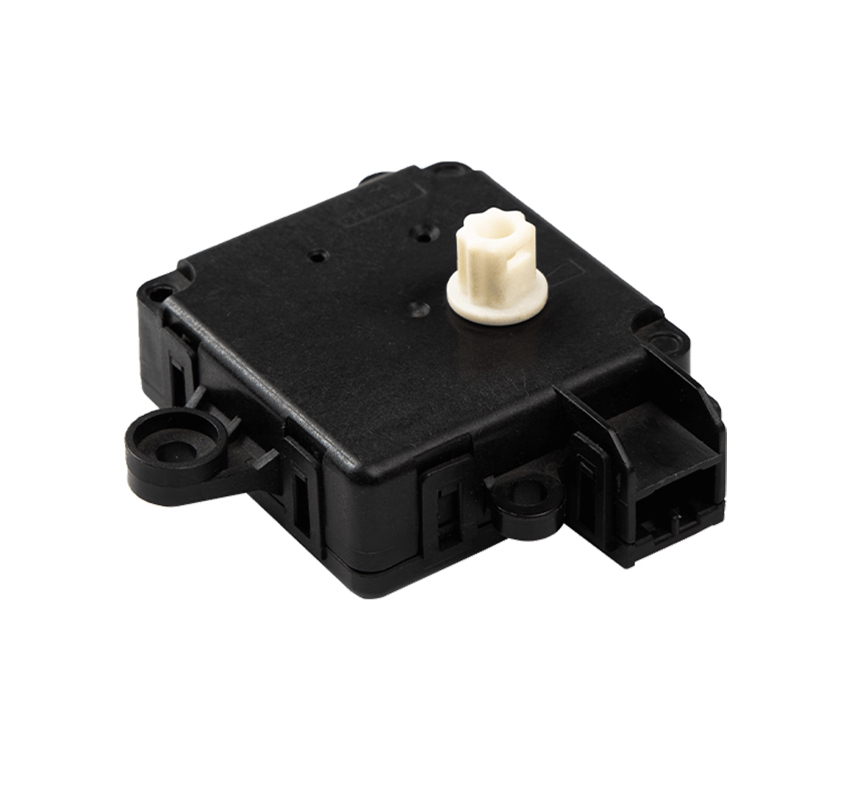
DC-powered HVAC actuators use direct current and are often used in applications that require precise control, lower power consumption, or integration with electronic control systems.
DC actuators are commonly found in:
Smart HVAC systems
Battery-powered applications
Energy-efficient buildings
Low-voltage control systems
Advantages of DC-powered HVAC actuators include:
More efficient power usage
Better compatibility with electronic control systems
Suitable for variable-speed and precise positioning applications
Lower voltage operation for certain installations
Many modern HVAC actuators support both AC and DC power inputs, making them more flexible for different system designs.
The main difference between AC and DC HVAC actuators is the type of electrical power they use and how they are integrated into HVAC control systems.
| Feature | AC HVAC Actuator | DC HVAC Actuator |
|---|---|---|
| Power type | Alternating current | Direct current |
| Common voltage | 24V AC, 120V AC, 230V AC | 24V DC, 12V DC |
| Typical applications | Commercial HVAC systems | Smart and electronic control systems |
| Installation | Common in traditional HVAC systems | Common in modern low-voltage systems |
| Energy efficiency | Depends on system design | Generally efficient for low-power applications |
Yes, many modern HVAC actuators are designed to operate with both 24V AC and 24V DC power supplies. These actuators are often called 24V AC/DC actuators.
Using a dual-power actuator provides several benefits:
Easier system compatibility
Reduced installation limitations
Flexible replacement options
Simplified inventory management for HVAC professionals
However, it is important to check the actuator specifications before installation because not every actuator supports both power types.
When choosing between AC and DC HVAC actuators, consider the following factors:
Check the existing control system and power supply available at the installation location. The actuator must match the system voltage and control signals.
Commercial buildings often use AC-powered actuators, while smart buildings and advanced automation systems may require DC-powered options.
Different HVAC actuators use different control signals, including:
On/off control
Floating point control
Modulating control
0-10V or 4-20mA control
The actuator power type should match the controller and automation system.
For energy-saving HVAC systems, DC actuators may provide advantages due to lower power consumption and precise control capabilities.
HVAC actuators can be powered by either AC or DC electricity, depending on the system design and application requirements. AC-powered actuators are commonly used in traditional commercial HVAC systems, while DC-powered actuators are often selected for smart buildings and energy-efficient applications.
When selecting an HVAC actuator, it is important to consider voltage compatibility, control signals, installation requirements, and system performance. Choosing the right AC or DC actuator ensures reliable airflow control and improves the overall efficiency of the HVAC system.

Mr. Hansol Kim